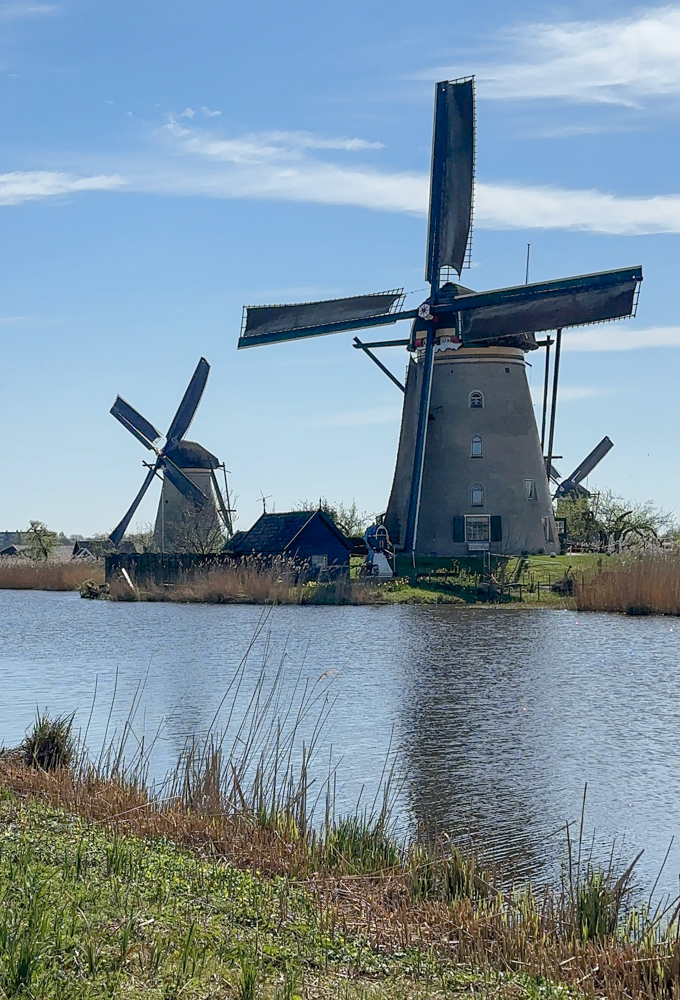
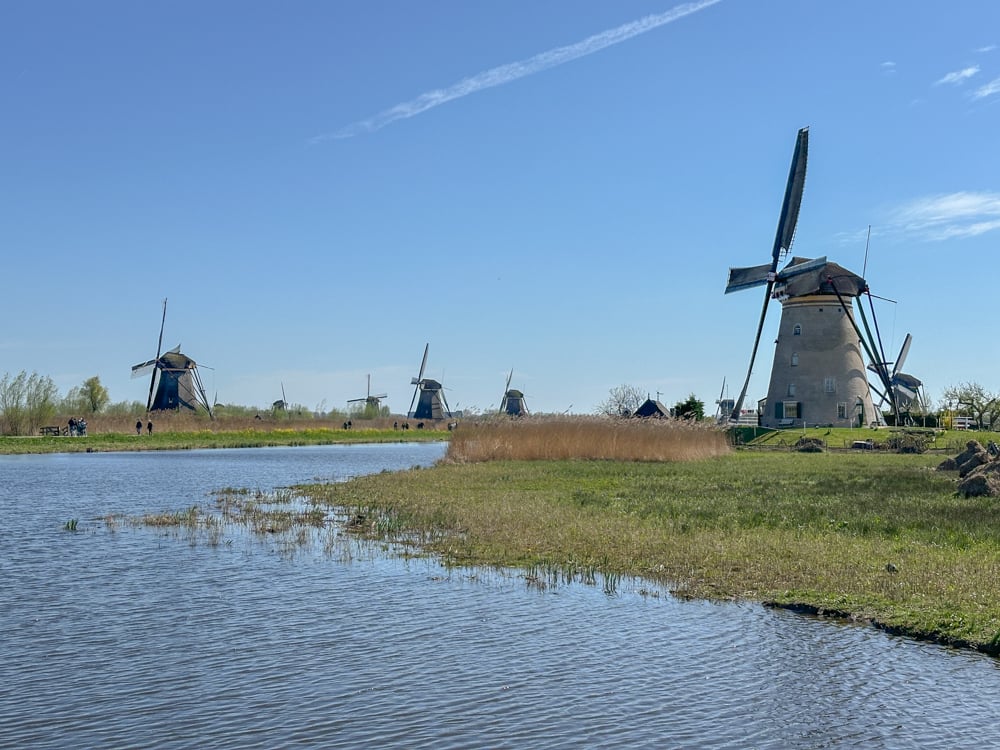
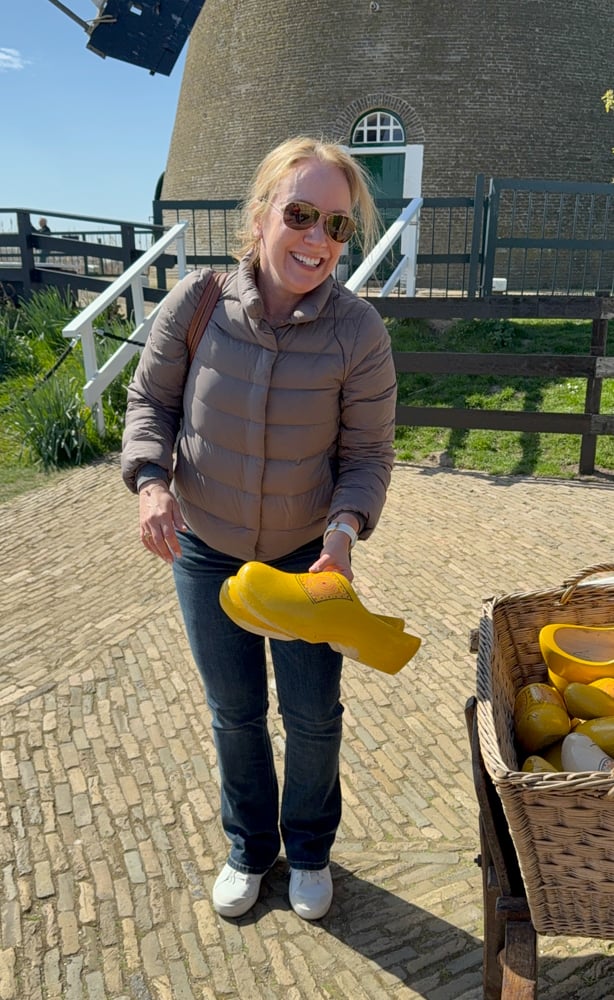
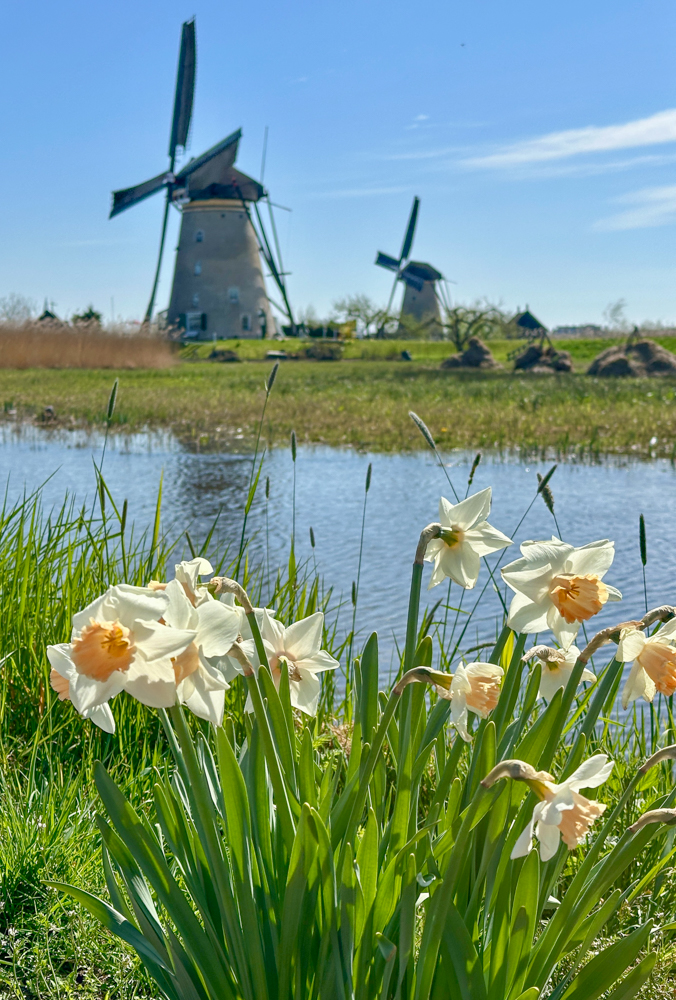
When most people picture the Netherlands, windmills are the first thing that comes to mind. And if you want to see the real thing, the Kinderdijk windmills are the best place to see them. They are one of those rare sights that live up to every photograph you have ever seen of them, nineteen windmills standing in a flat Dutch landscape, reflected in still canals, with nothing but open sky and green fields around them.
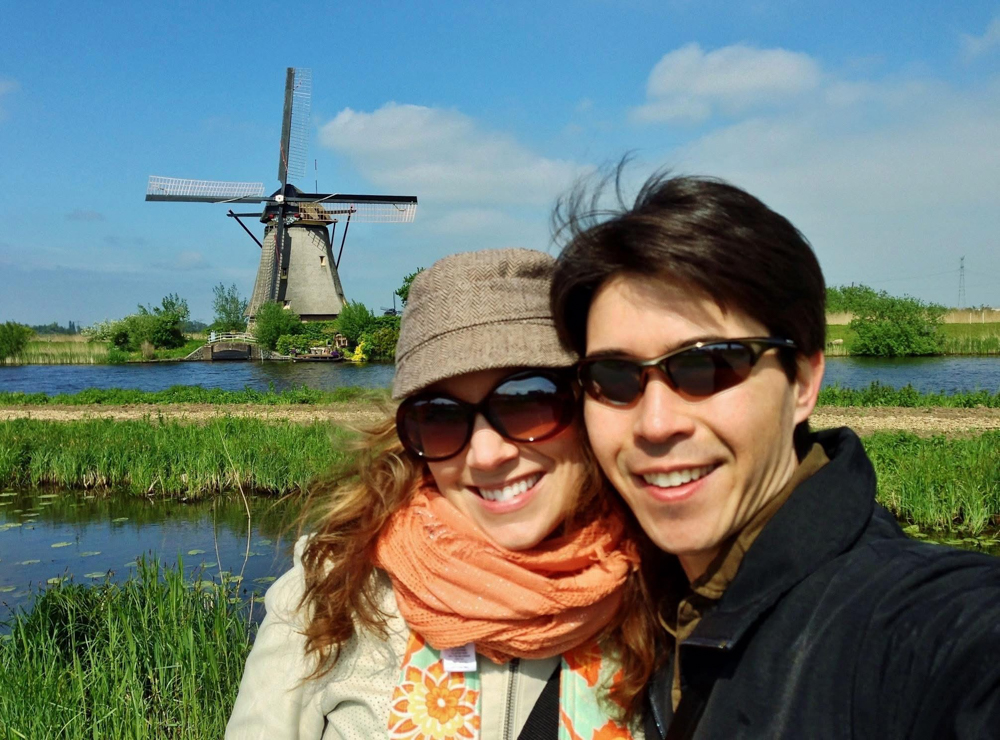
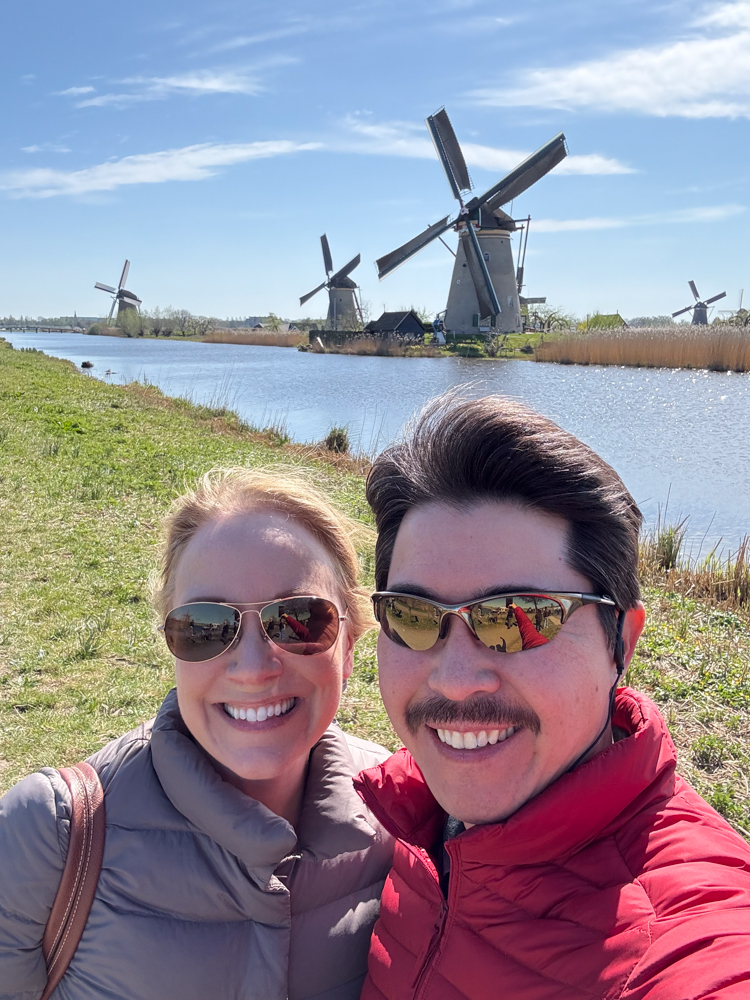
For me and Pete, this was actually a return visit. We had come to Kinderdijk about a decade ago on a trip to Rotterdam, and loved checking “seeing real Dutch windmills” off our bucket list. Coming back, though, what struck us most was how much the site has evolved. It is better organized and even more beautifully maintained than we remembered. And this time, we finally got to go inside one of the windmills which was such a unique experience.
What Are The Kinderdijk Windmills?
Kinderdijk is a village about 15 kilometers east of Rotterdam, and what makes it remarkable is not just how it looks but what it represents. The windmills here were built between 1738 and 1740 to solve a very Dutch problem: the land is below sea level, the soil keeps sinking, and without constant water management, this entire region would flood. The windmills were the solution, pumping water out of the low-lying polders (reclaimed land that sits below sea level, held dry by a system of dikes and drainage) and pushing it toward the rivers.
UNESCO recognized Kinderdijk as a World Heritage Site in 1997, and it is the largest concentration of historic windmills in the Netherlands. The mills are maintained in working order and could be put back into service if needed. But today the real drainage work is handled by modern electric pumping stations nearby, but standing among the windmills, that history feels very much alive.
The Cat And The Cradle
Kinderdijk means “Children’s Dike” in Dutch, and there is a legendary story from the Saint Elizabeth’s Flood of 1421, one of the most devastating floods in Dutch history. As the waters finally receded, survivors discovered a wooden cradle floating near the dike. A cat was perched on its edge, leaping back and forth to keep it balanced. Inside, dry and unharmed, was a sleeping baby.
Whether or not the legend is literally true is debated by historians, but the story has belonged to this place for six centuries. You can see it brought to life in the short film at the visitor center, which is worth a few minutes of your time before you head out to the mills.
Going Inside The Kinderdijk Windmills: The Part You Cannot Miss
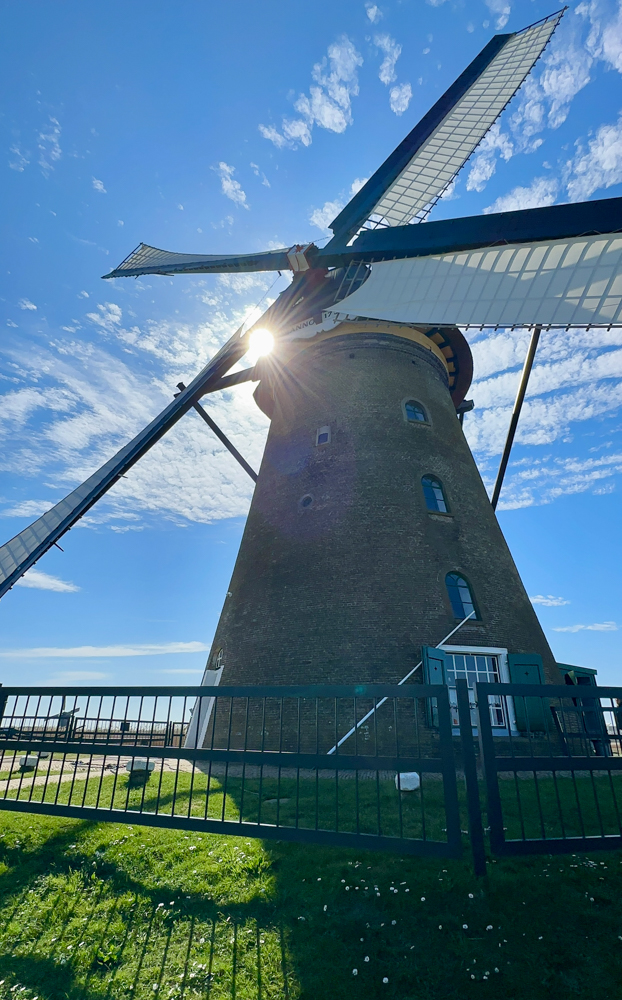
This was genuinely the highlight of the visit for us, and I want to describe it properly because no photo really captures what it is like. When we walked up to the windmill, it was actually turning and you hear this deep, rhythmic whoosh as each sail sweeps past. Standing right next to a turning windmill, you realize just how incredibly large the sails are. The sound is incredible, almost meditative, and the scale of it up close is genuinely surprising even when you think you are prepared for it. The area right at the base is fenced off for safety, so you are close, but not dangerously so.
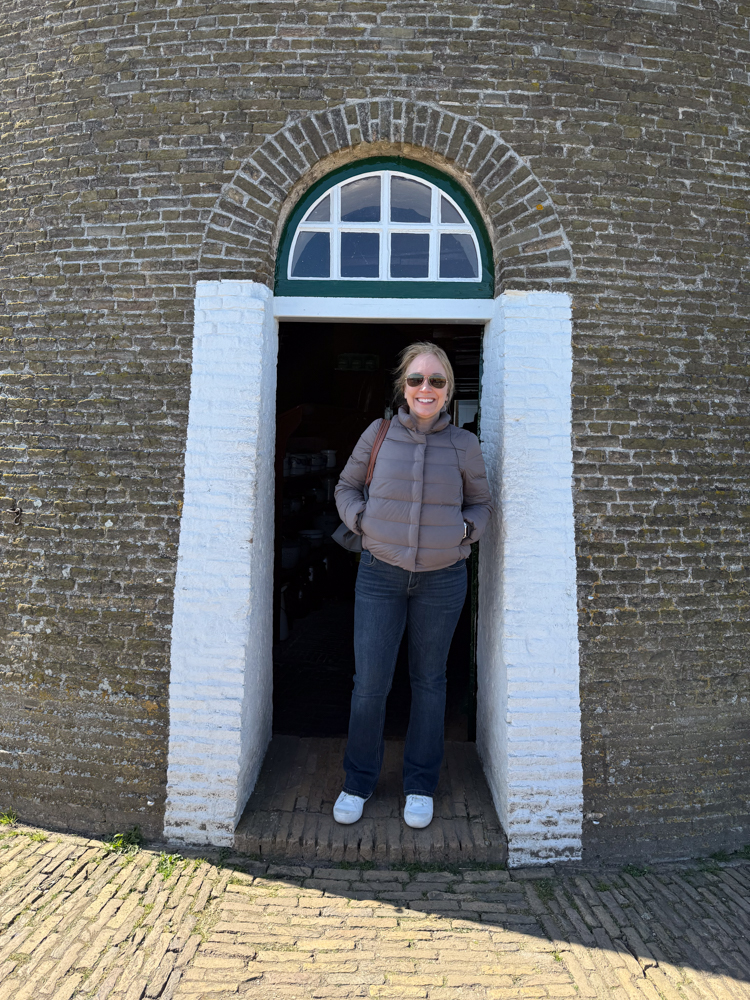
Going inside is a whole other experience. Three of the windmills are open as museum mills, each furnished and interpreted to reflect a different period of life at Kinderdijk. The one we visited is preserved to show what it was like to live and work here in the 1950s, the last era when miller families actually called these towers home.
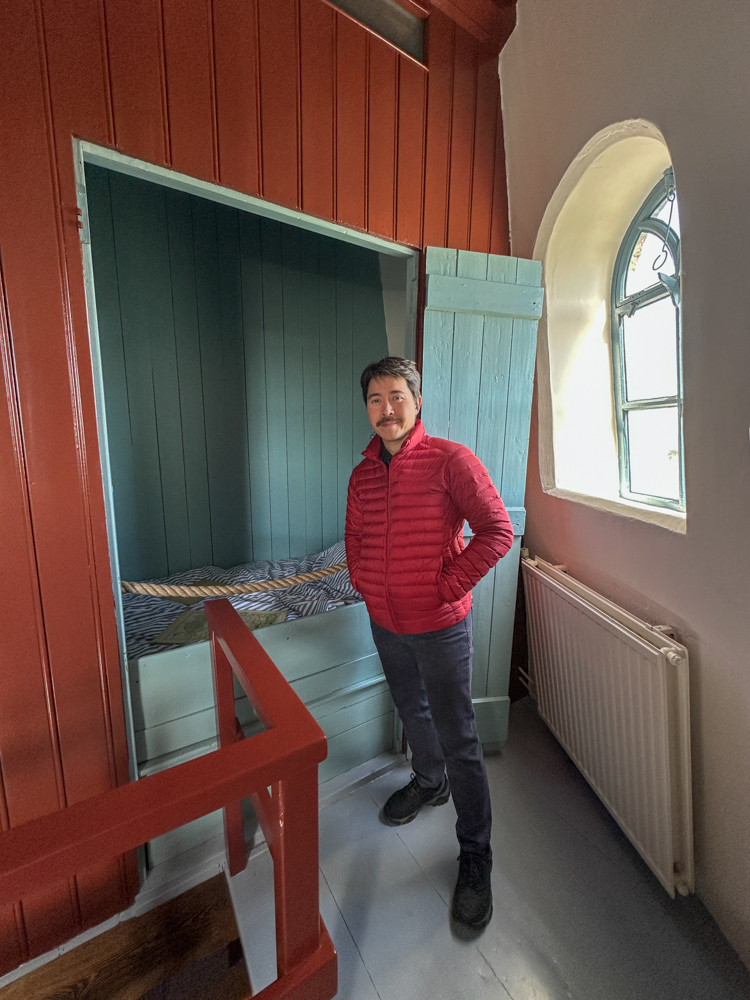
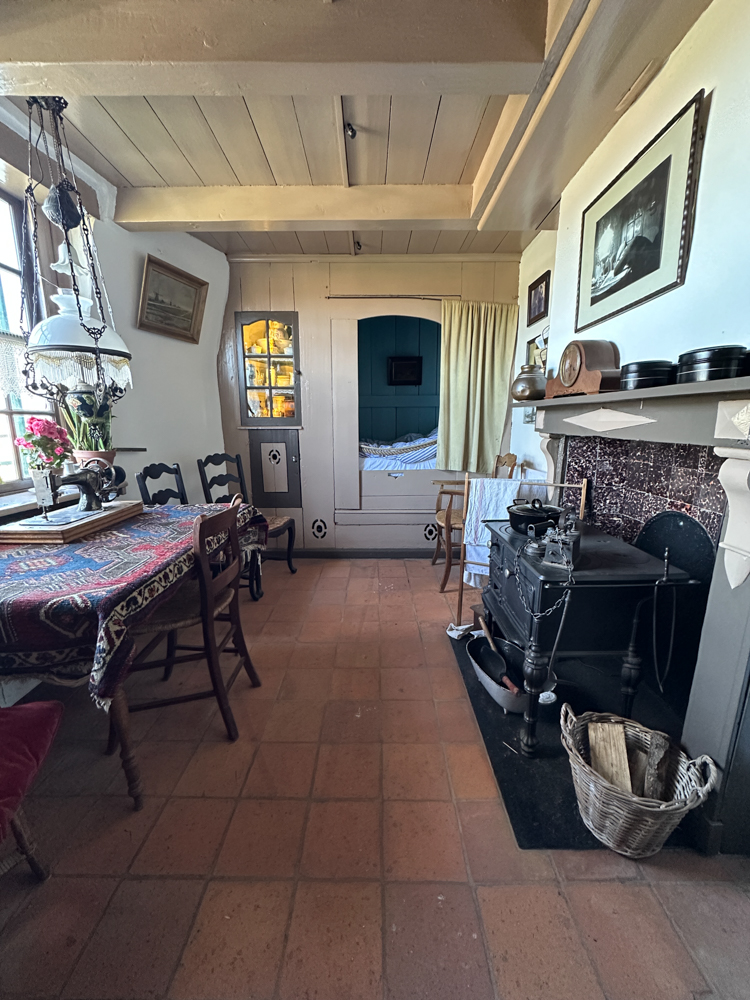
The interior is tight. The bedrooms are tiny cubbies built right into the walls, barely big enough for a person. The whole place has this wonderful quality of being like a very old, very serious jungle gym with narrow ladders and steep staircases between floors, low beams that require ducking, and ceilings that close in as you climb. It is genuinely fun to move through, in a slightly hold-your-breath kind of way. You find yourself charmed and a little humbled at the same time, thinking about the families who raised children in this space.
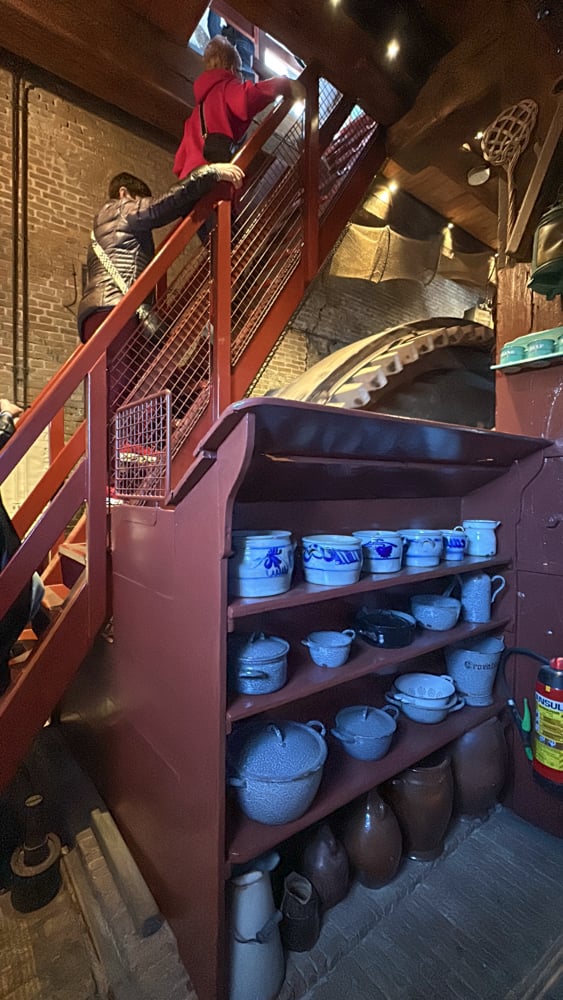
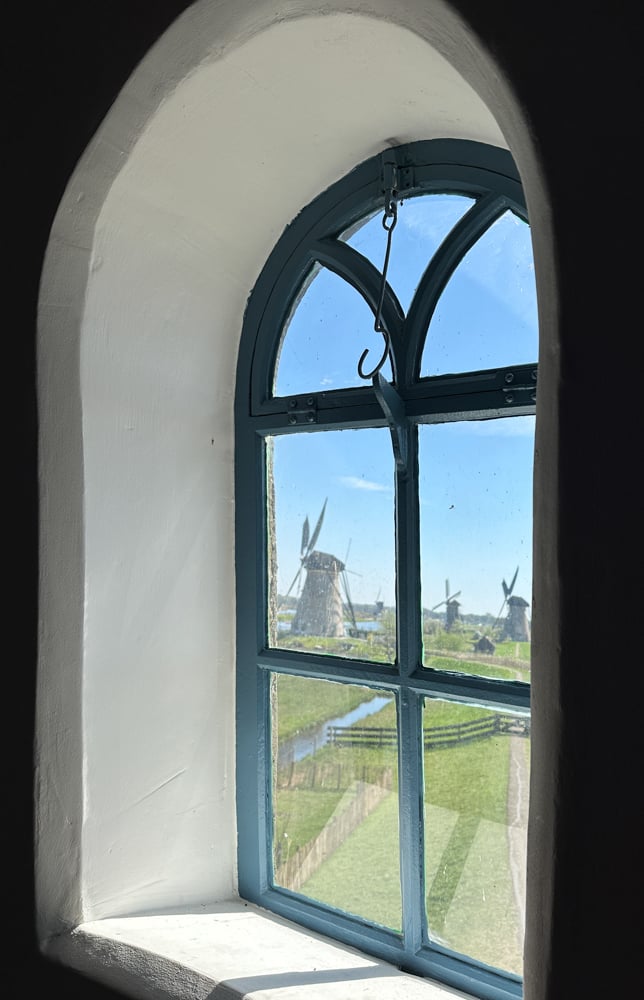
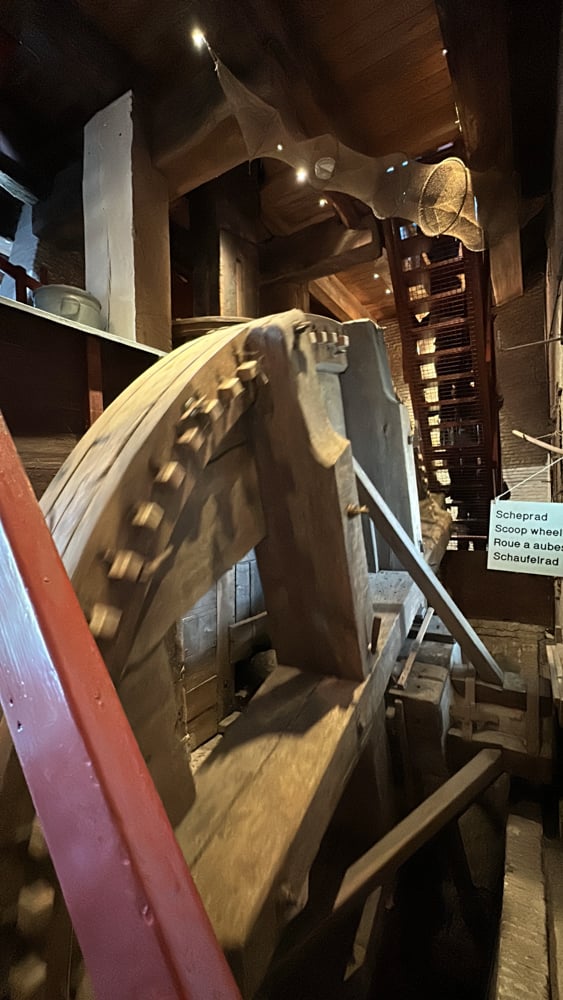
One practical note: going inside requires comfort with ladders. The staircases and ladders are steep and narrow. If ladders are not your thing, you can still see a great deal from the ground floor and the area around the base. But if you can manage the climb, definitely do it.
The Landscape and How to Explore It
The thing about Kinderdijk that catches people off guard is how open and peaceful it is. The site is flat in that particular Dutch way, where the sky feels enormous and the horizon goes on forever. The mills line both sides of the canal paths and their reflections in the water on a calm day are almost impossibly beautiful.
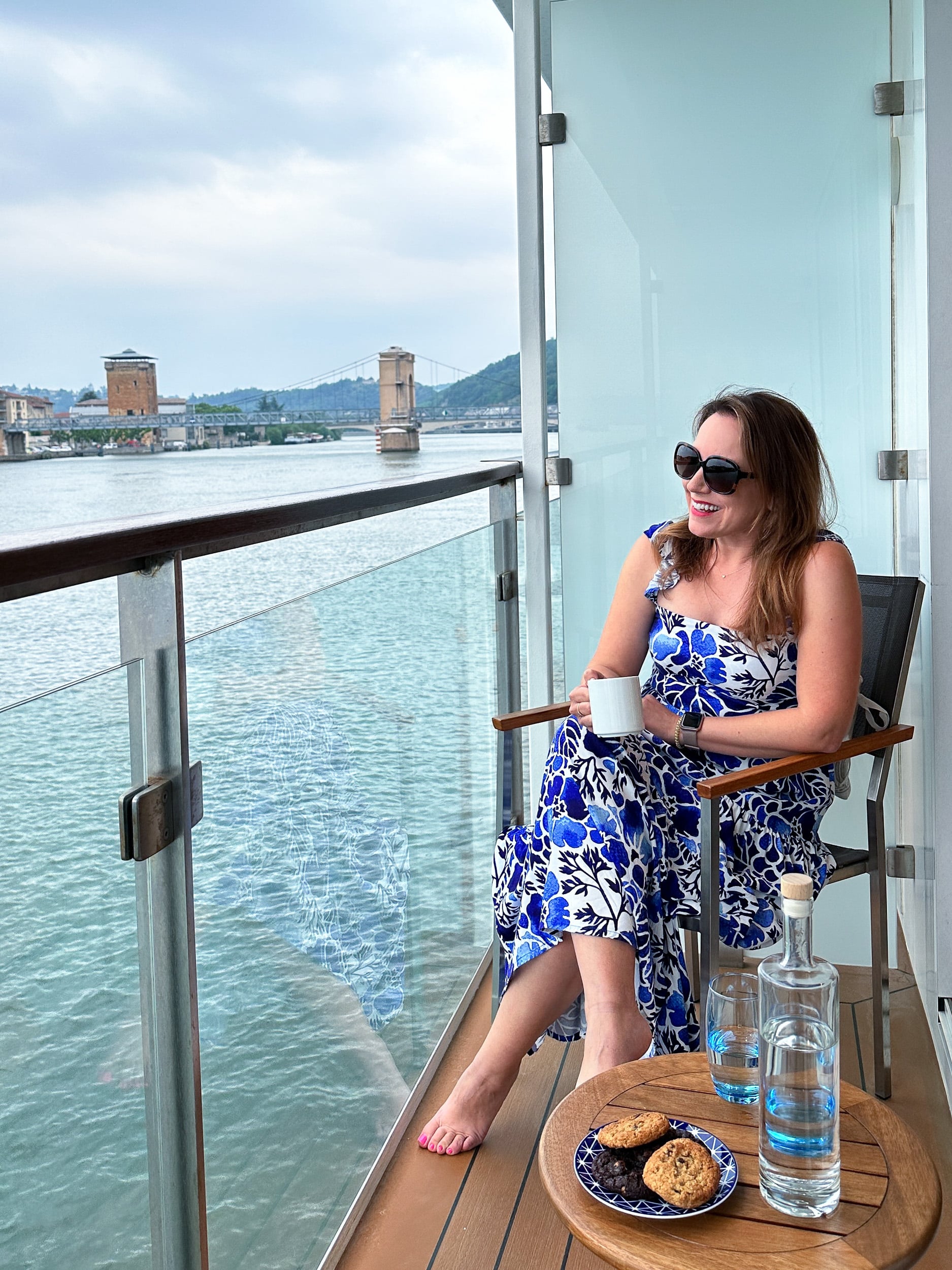
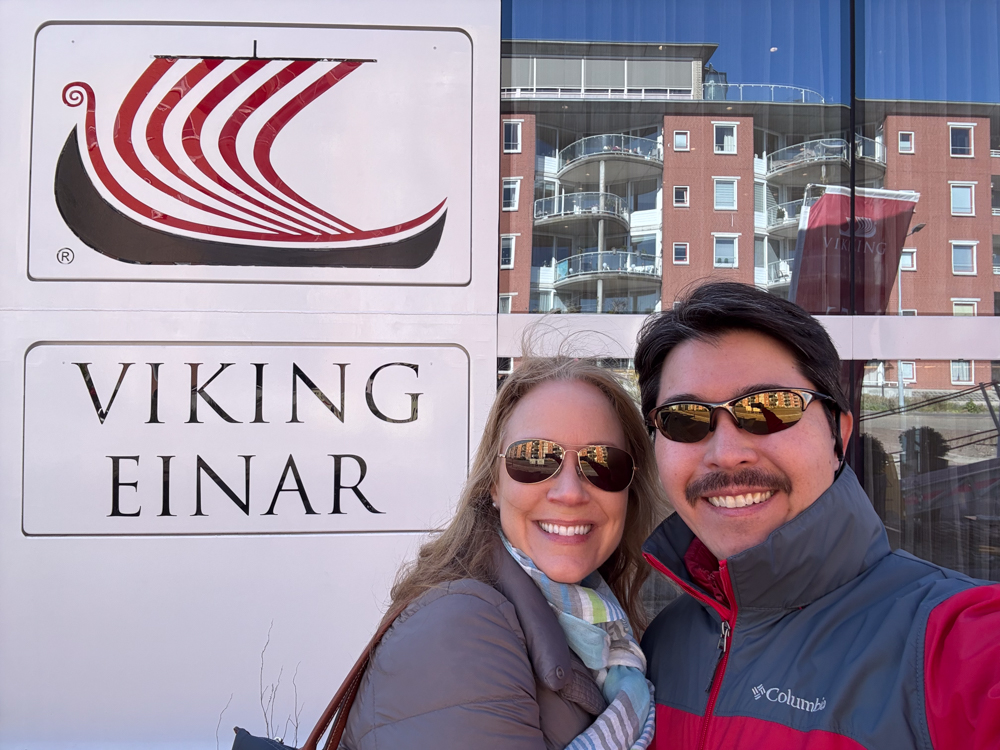
If you are visiting on your own from Rotterdam, you can take a ferry directly to Kinderdijk and have the freedom to walk the full length of the site at your own pace. That is how Pete and I first experienced it, and it is a wonderful way to go. On this trip with Viking, we docked right at Kinderdijk and walked straight off the ship and across the street to the entrance, which was remarkably easy. The included guided walking tour was the right call for the cruise context, covering the highlights with good historical context and a visit inside one of the mills without feeling rushed.
Practical Tips Before You Go
- You’ll walk right off the ship. On Viking’s Tulips & Windmills cruise, the ship docks right at the Kinderdijk Windmills and the entrance is just across the street. It is one of the most effortless arrivals of the whole itinerary.
- The included guided walking tour is enough. It covers the key history and highlights at a comfortable pace. There is also an optional boat excursion if you want to see the mills from the water, but the walking tour stands on its own.
- Go inside a windmill. The outdoor experience is beautiful, but the museum mills are where the visit becomes memorable. Do not skip them.
- Stop into the visitor center at the end. The visitor center, gift shop, and cafe are a newer addition to the site and worth a peek before you head back. The short film about Kinderdijk’s history is genuinely good.
- Be ready for ladders. Comfortable shoes and a willingness to duck and climb will serve you well inside the mills.
- Wear layers and sun protection. It is an open, exposed site on the water. Even on a warm spring day it can be breezy out on the dike paths.
Why It Is Worth It
Kinderdijk delivered everything we hoped for on this trip, and the windmill interior pushed it from lovely to genuinely memorable. The windmills are beautiful. The history is remarkable. And the experience of being there, especially for the first time inside one of the mills, is something that stays with you long after the cruise is over.
Visiting on Viking’s Tulips & Windmills cruise? Read our full cruise review for the complete picture, and our guide to Keukenhof Gardens, the other stop on this itinerary that absolutely should not be missed.