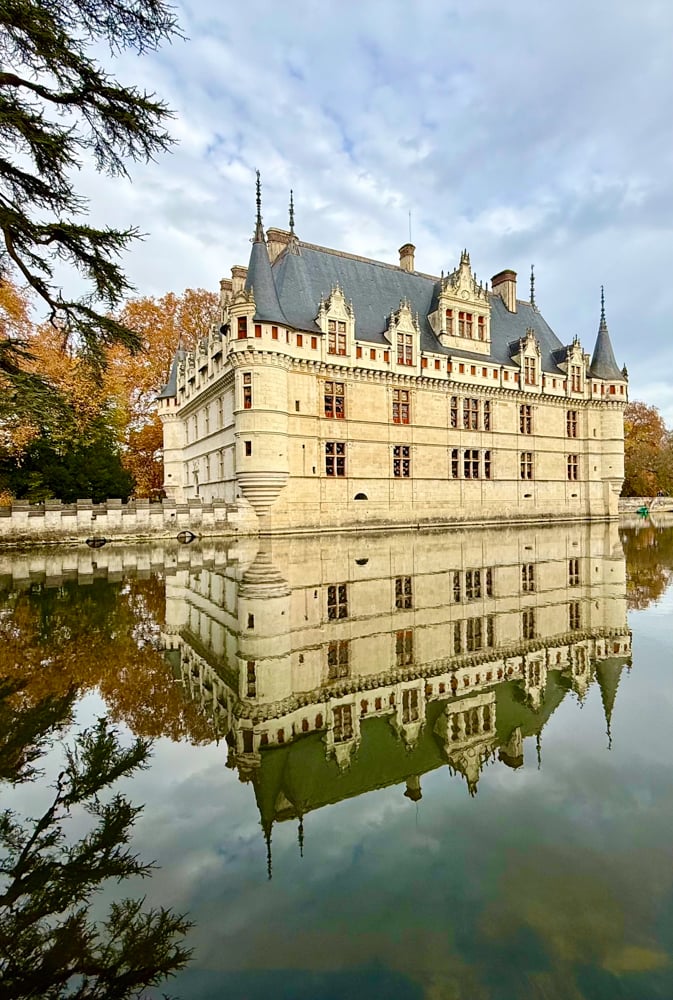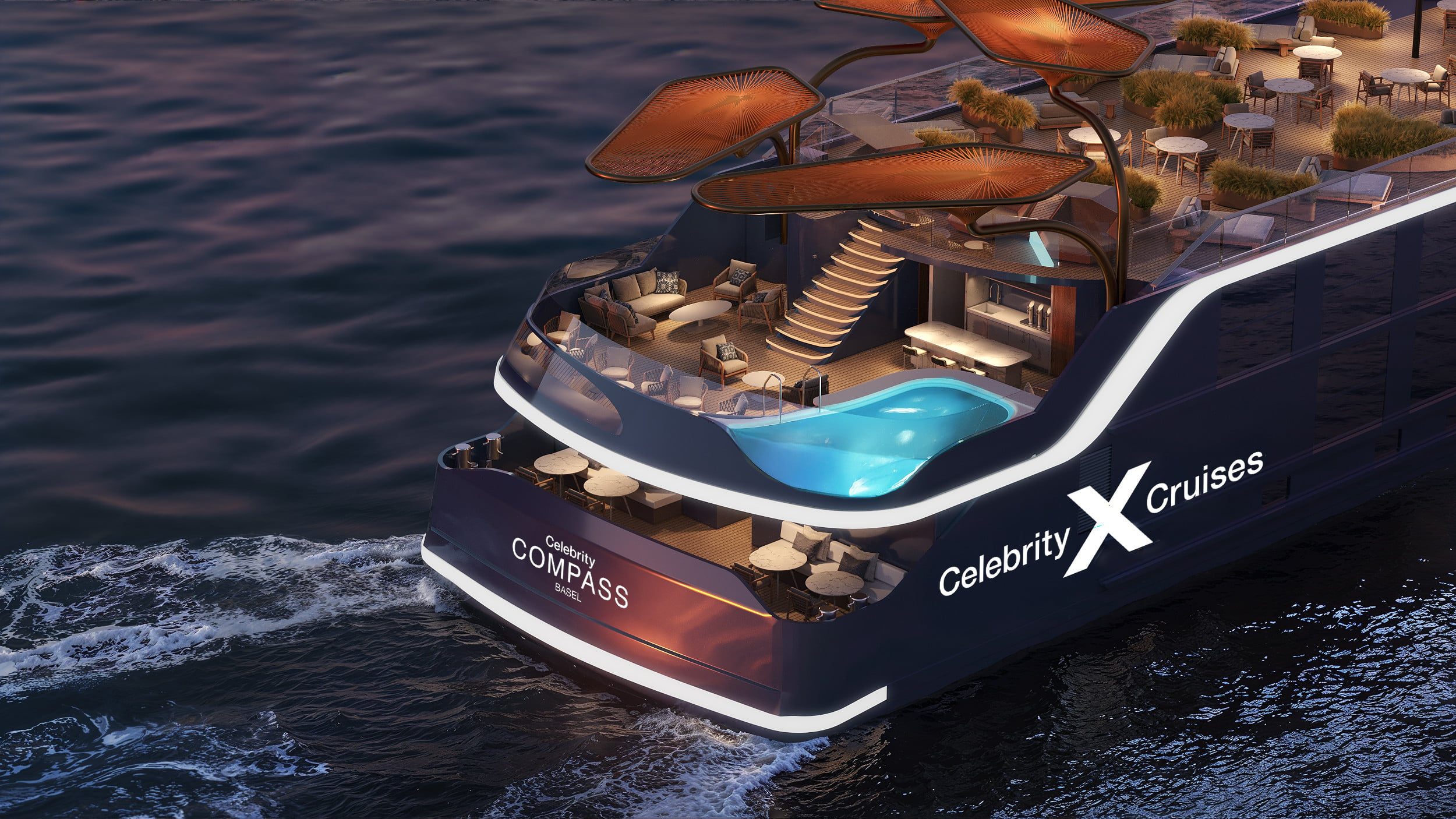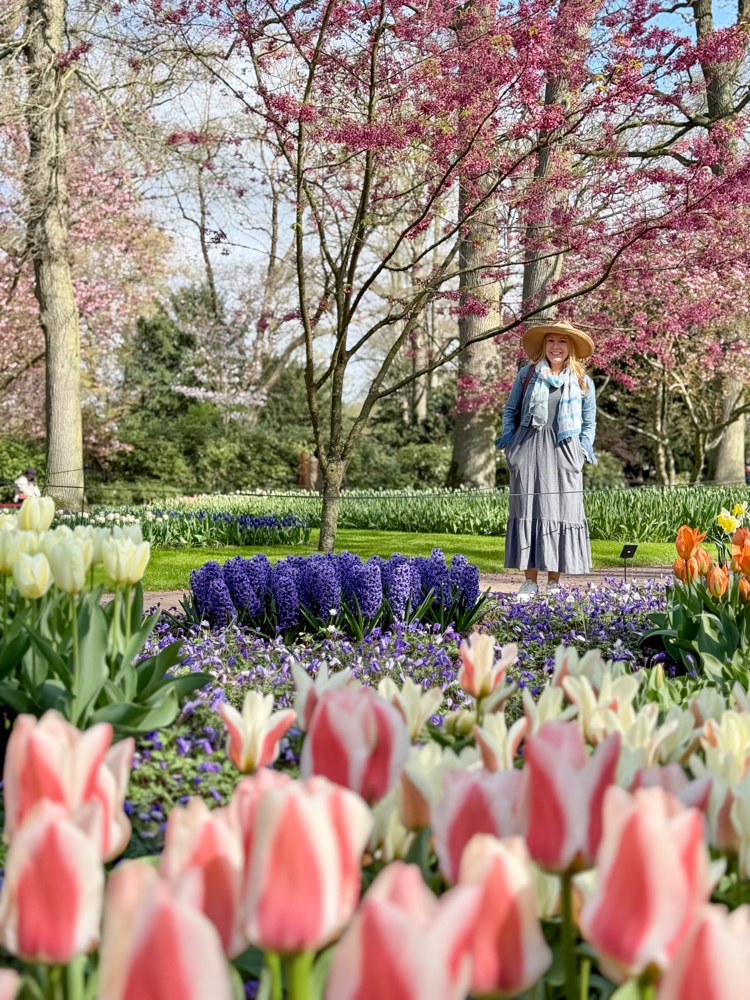

If you’re researching river cruises in the Netherlands or the Tulips & Windmills river cruise and wondering what river it actually sails, we did too! This popular springtime cruise route doesn’t actually follow a single river like most other river cruises. Instead it sails through the Rhine-Meuse-Scheldt Delta, the sprawling network of waterways where three of Europe’s great rivers fan out across the Netherlands and Belgium before reaching the North Sea.
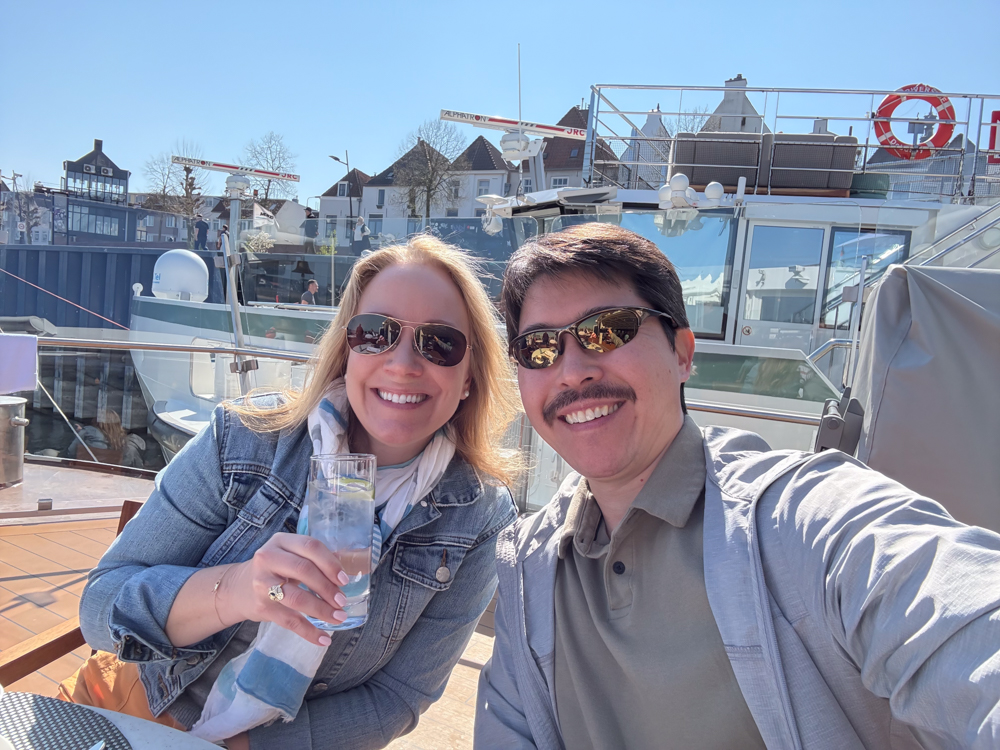
We went on the Viking Tulips and Windmills cruise (several cruise lines actually offer this itinerary) and it felt completely different than other river cruises we’d been on. Almost every morning we woke up on a new waterway, and I kept taking Google Maps screenshots to try and keep track of where we were. One morning it was a wide open lake, the next it was a narrower river with green fields on both sides, and the next we were pulling into a Belgian city. It kept the whole trip feeling fresh in a way we didn’t anticipate.
About the Delta
The Netherlands sits at the mouth of three major rivers: the Rhine, the Meuse, and the Scheldt. By the time the Rhine gets here, it has already traveled more than 800 miles from Switzerland, and rather than emptying into the sea cleanly, it splinters into dozens of branches, each with its own name. The Waal takes the biggest share of the water, flowing past Nijmegen toward Rotterdam. The Lek runs a parallel path. The Noord links them near Kinderdijk. The Scheldt flows up from Belgium. And connecting it all is a network of canals, including the Amsterdam-Rhine Canal that gives Amsterdam its access to the rest of the system.
On a map it looks genuinely bewildering, and in practice a single continuous waterway can change names half a dozen times before it reaches the sea. But sailing through it, you don’t need to track any of that. I honestly can’t without looking at my notes and screenshots of maps from our Tulips + Windmills cruise! So instead of saying, “we sailed this river,” we just say, “we sailed though The Netherlands!” But if you’re still curious, I have all the places we stopped along with the corresponding waterway below.
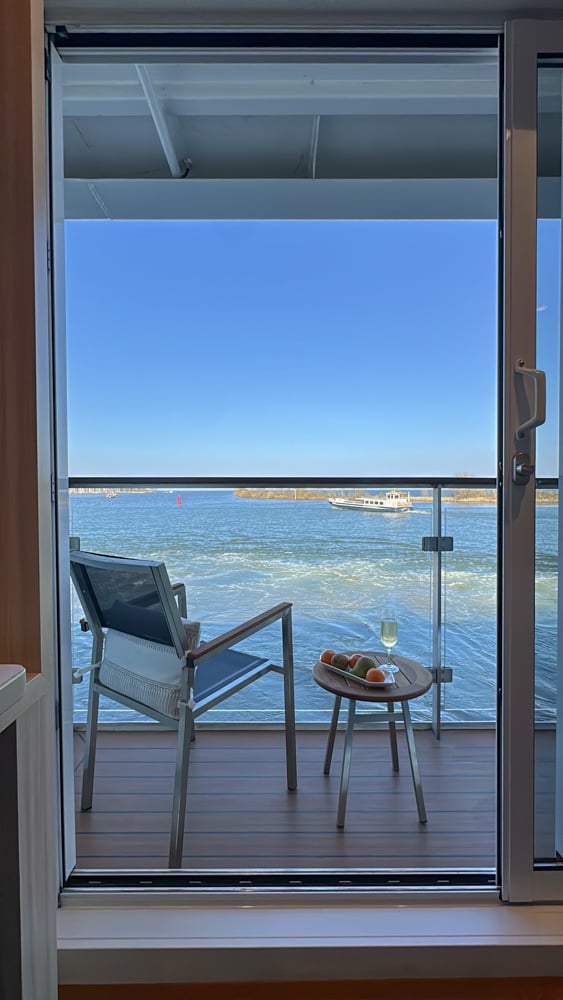
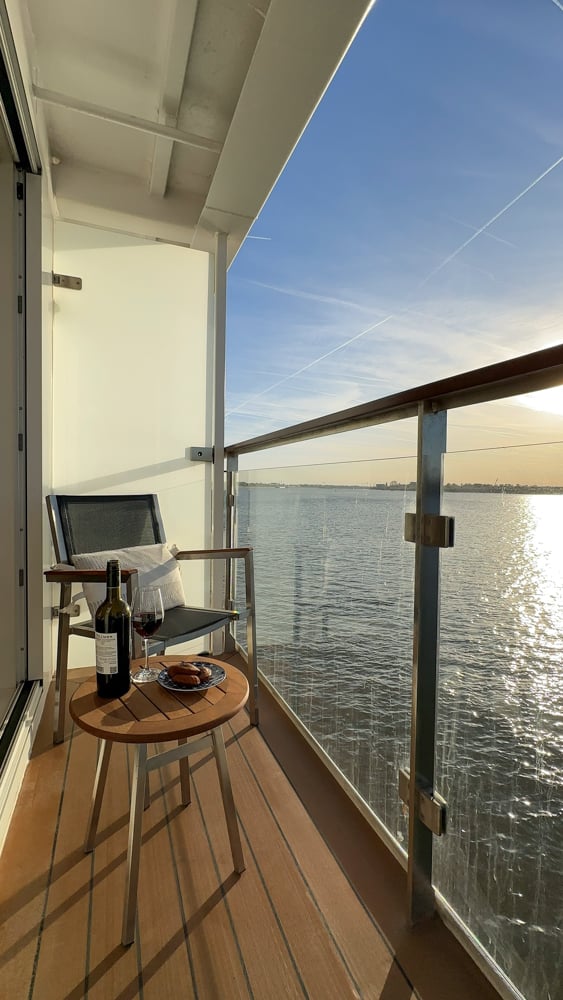
So, what river does the Tulips and Windmills river cruise sail?
The short answer is … several! Usually when we go on a river cruise, I can easily follow the route on a map and point out our stops along the way. This cruise was different, and honestly it was kind of fun to wake up each morning and look up where we were. Here’s a list of the waterways, stop-by-stop.
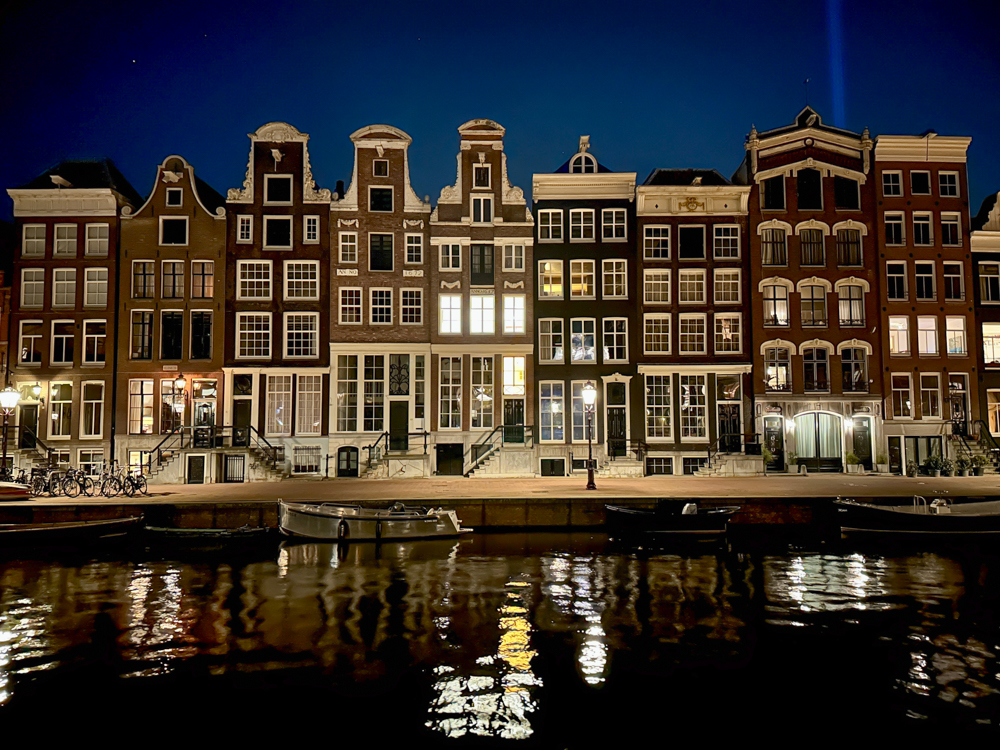
Amsterdam (The Amsterdam-Rhine Canal)
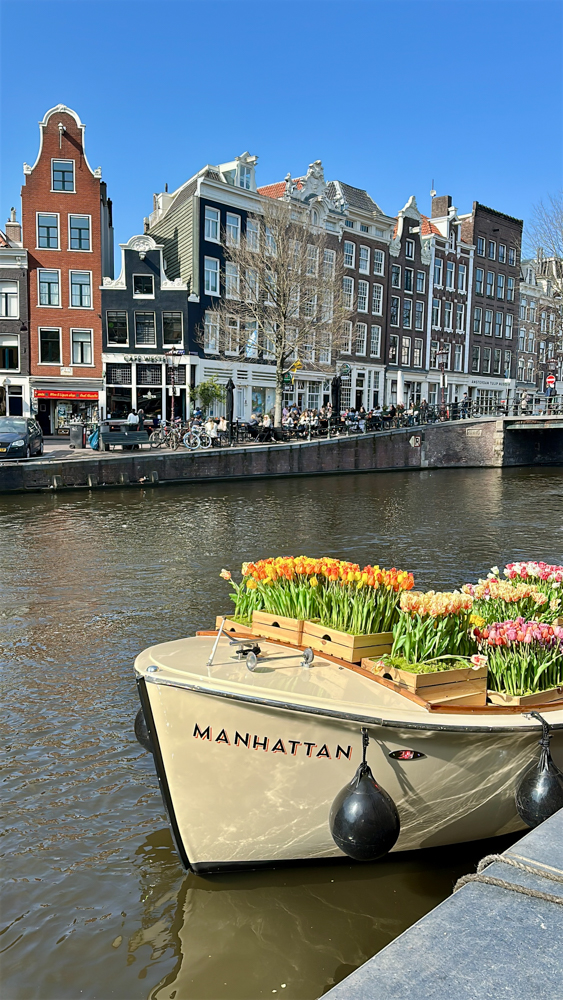
The cruise starts and ends in Amsterdam, which doesn’t sit directly on the Rhine but connects to the river system through the Amsterdam-Rhine Canal, an engineered waterway that links the port to the rest of Europe. This is where most Rhine river cruises also begin.
Enkhuizen (The IJsselmeer)
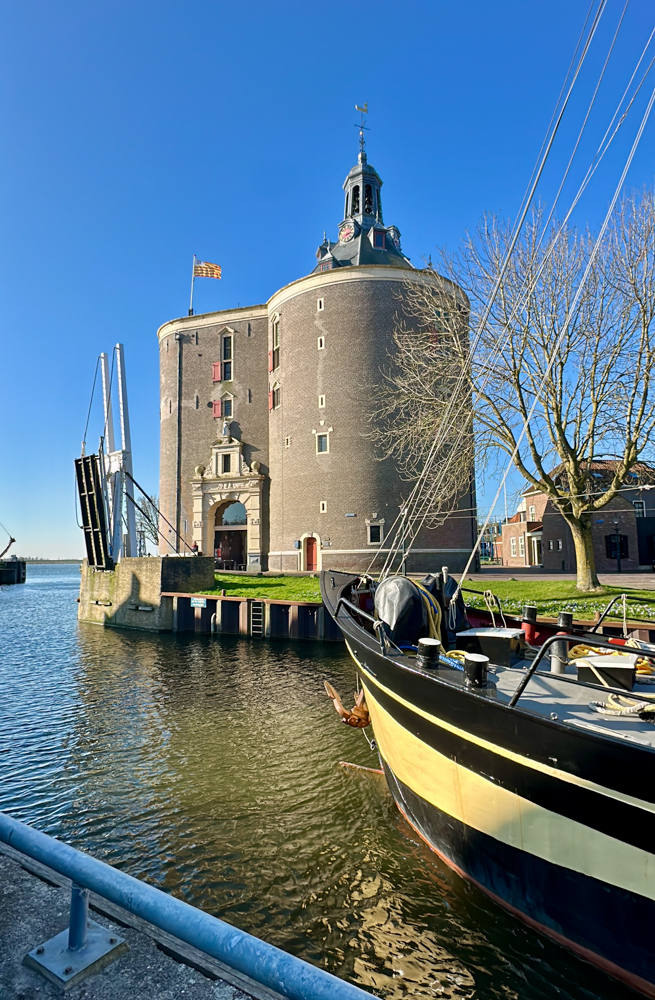
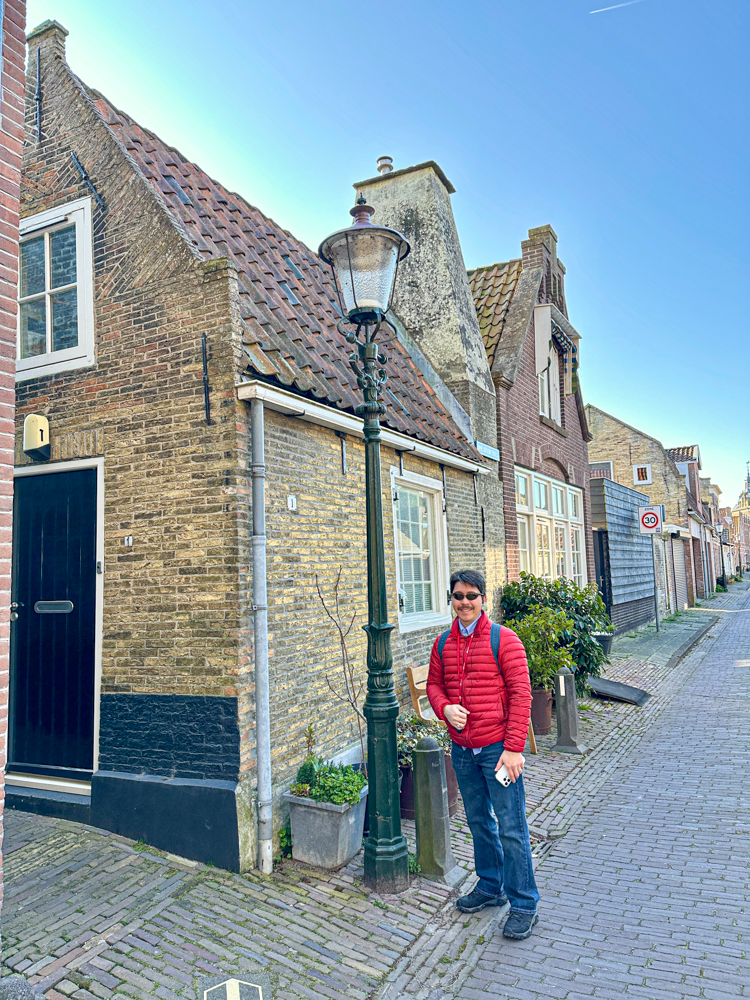
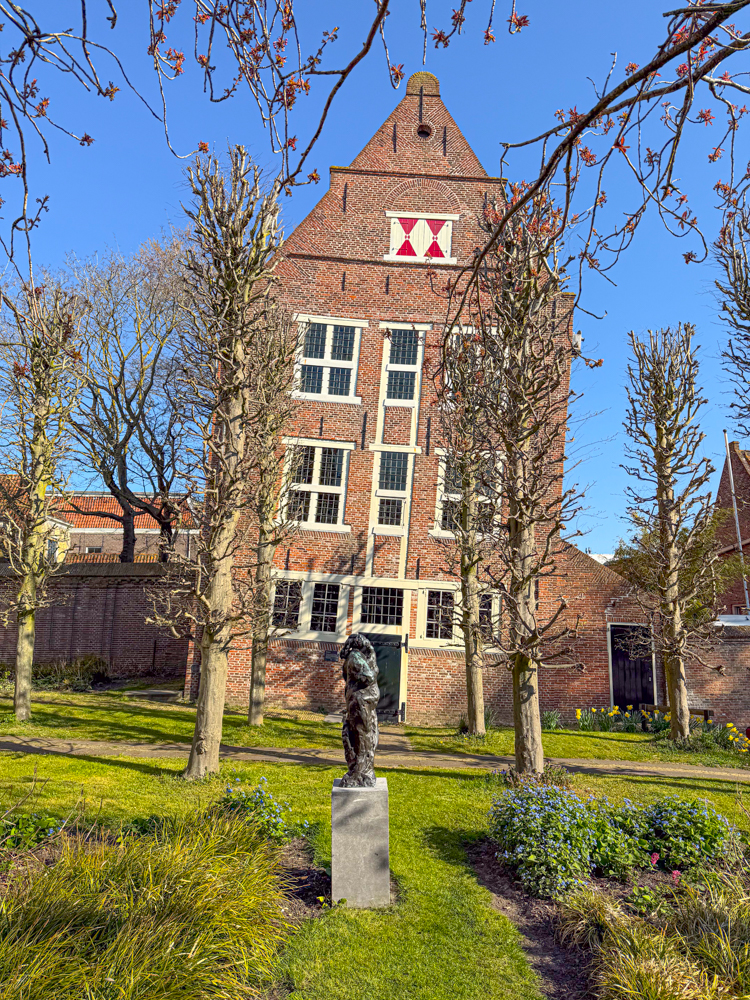
From Amsterdam the ship heads north across the IJsselmeer (also known as Lake IJssel in English), which is a large freshwater lake now but used to be an open saltwater bay until the Dutch closed it off with a dam in 1932. Our port stop here was Enkhuizen (say it like ENK-how-zen), and it turned out to be one of my favorite stops on the entire cruise. During the Dutch Golden Age, this was one of the most important cities in the country, a major herring fishing capital and a key base for the Dutch East India Company. When the bay closed, the herring went with it, and the city became a quiet village. What’s left is one of the most beautifully preserved historic town centers we’ve ever walked through.
Nijmegen (The Waal)
Heading south from Enkhuizen, the ship picks up the Waal, which is the main branch of the Rhine through the Netherlands. It carries about two-thirds of the Rhine’s total flow and it shows. The Waal is a working river, wide and busy, with cargo barges moving steadily in both directions. Watching that traffic, you start to understand how the Netherlands became such a trading powerhouse just by looking at what’s moving on the water.
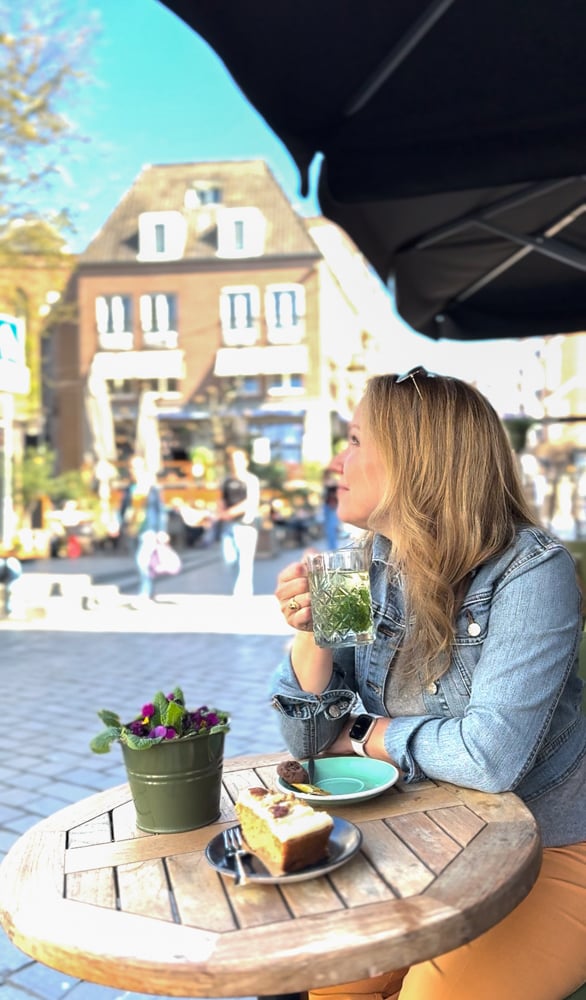
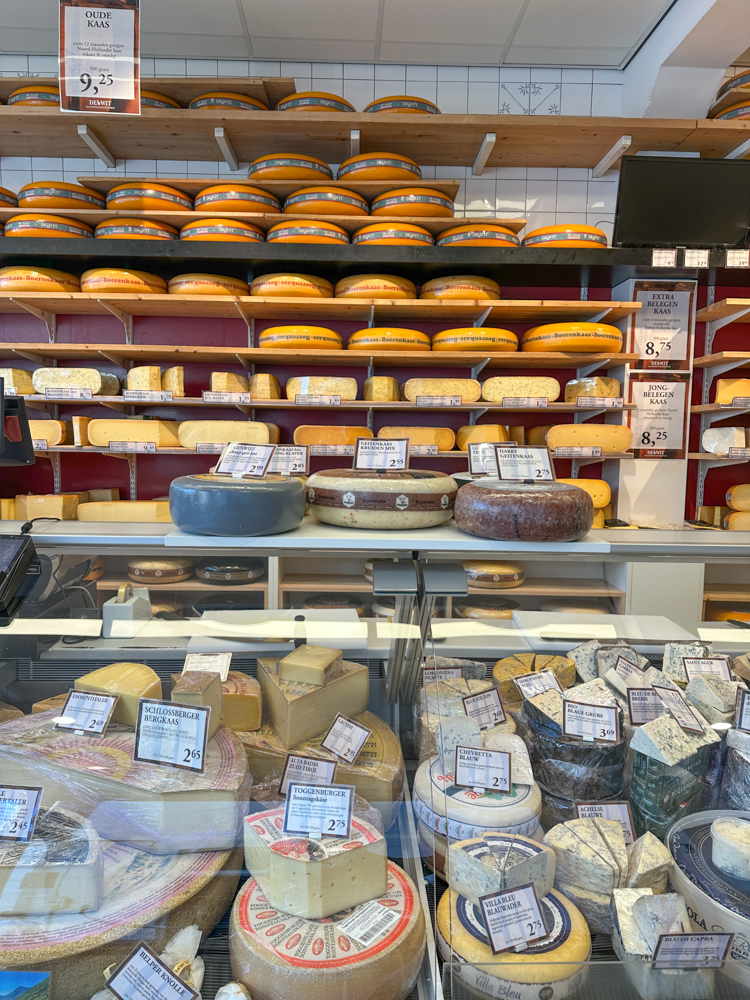
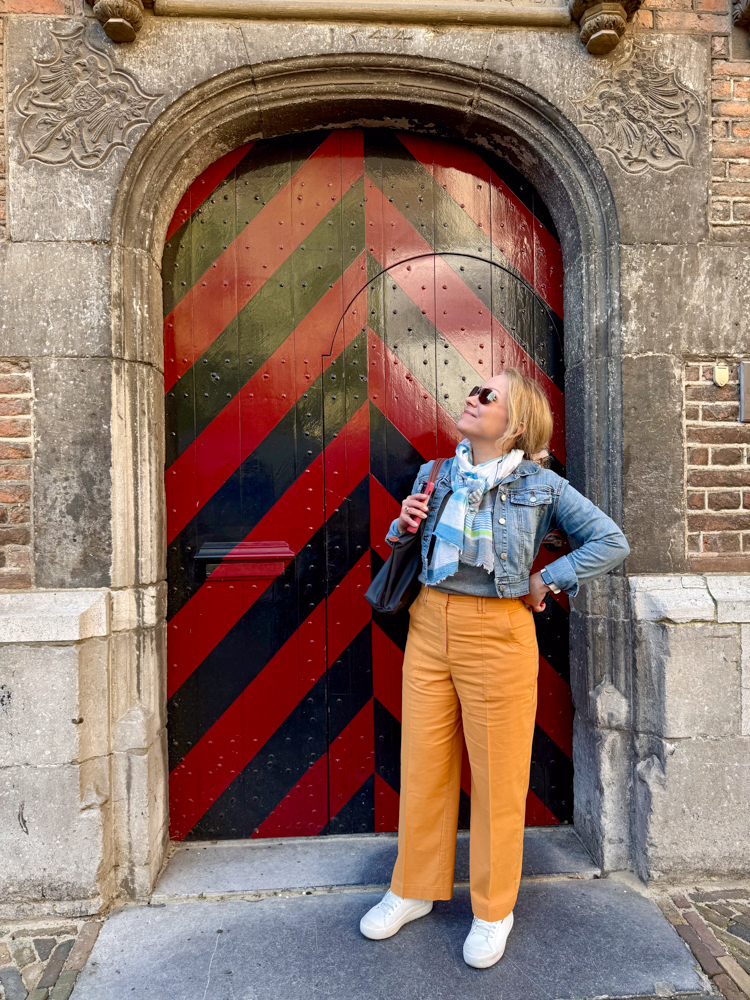
Nijmegen (say it like NYE-may-gen) sits on a bend of the Waal and has a pretty remarkable claim to fame: it’s the oldest city in the Netherlands, with roots going all the way back to Roman times. We did the included walking tour, then had a couple of hours on our own to wander and find lunch, which is honestly the ideal way to experience it.
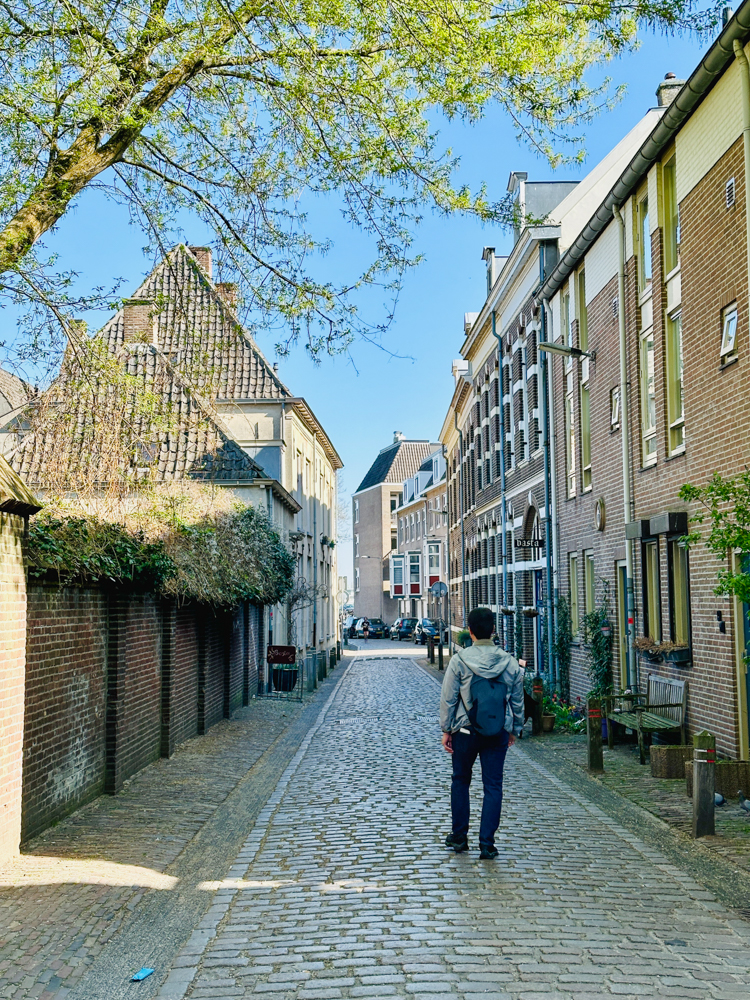
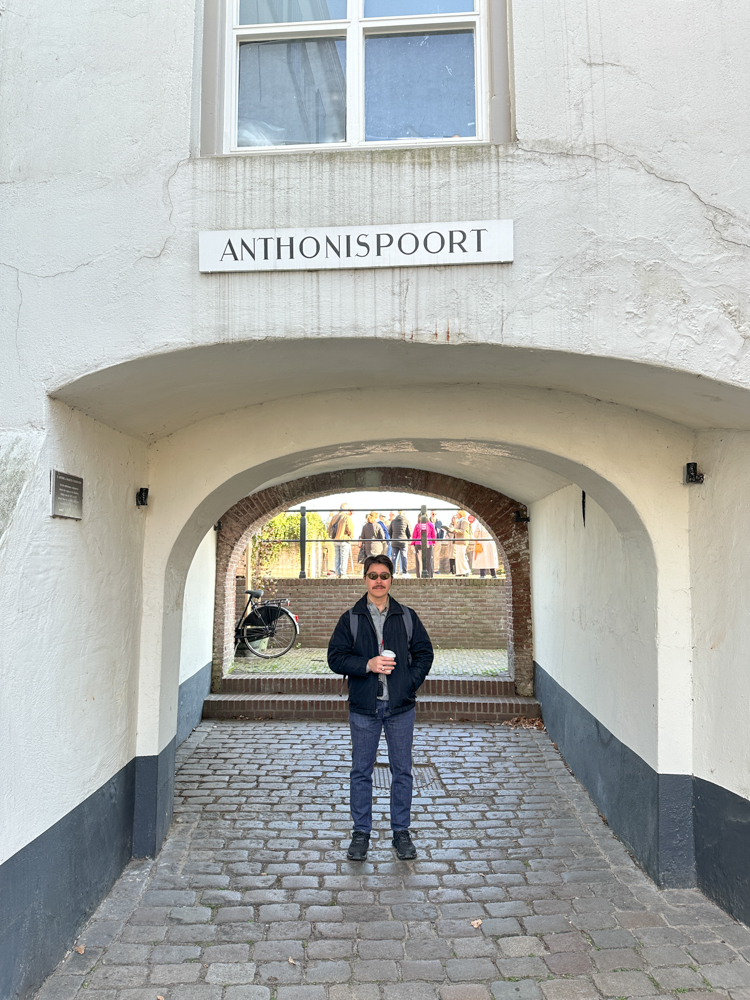
Kinderdijk (The Noord and Lek)
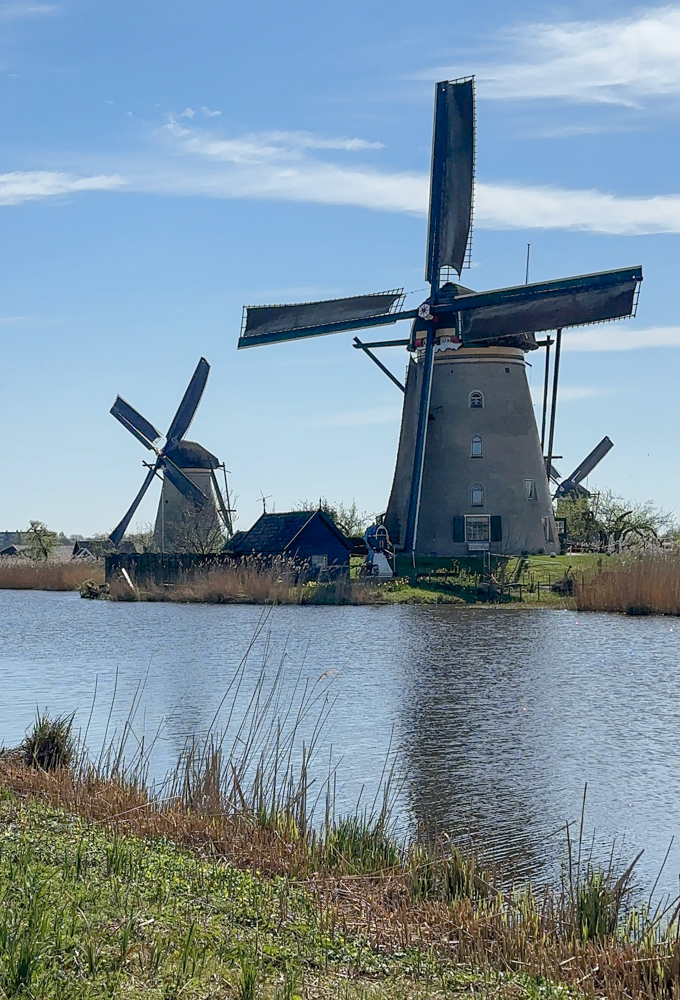
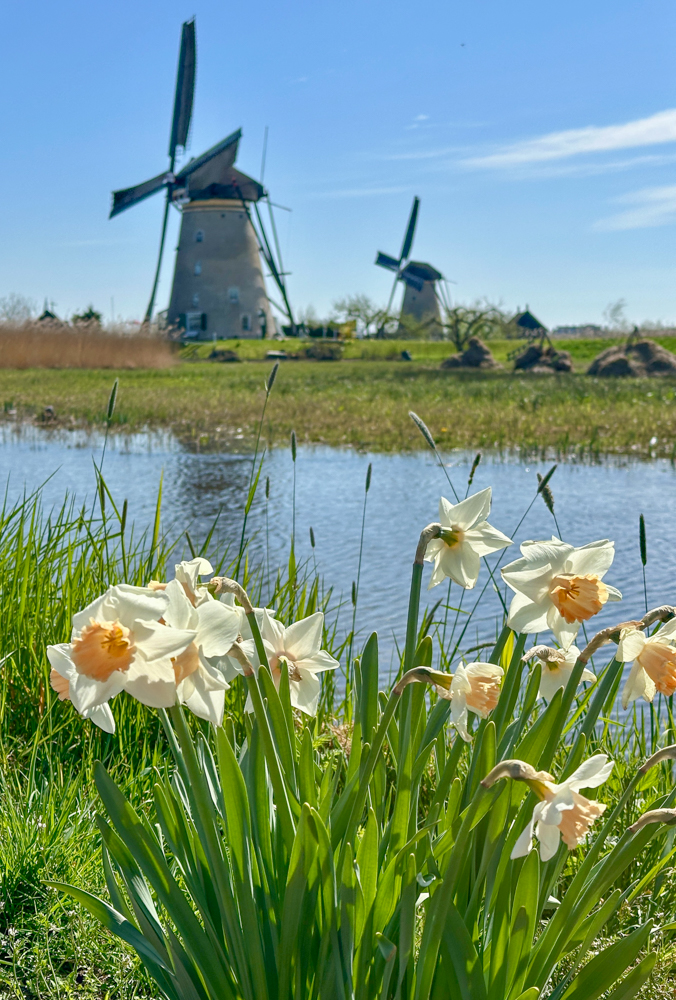
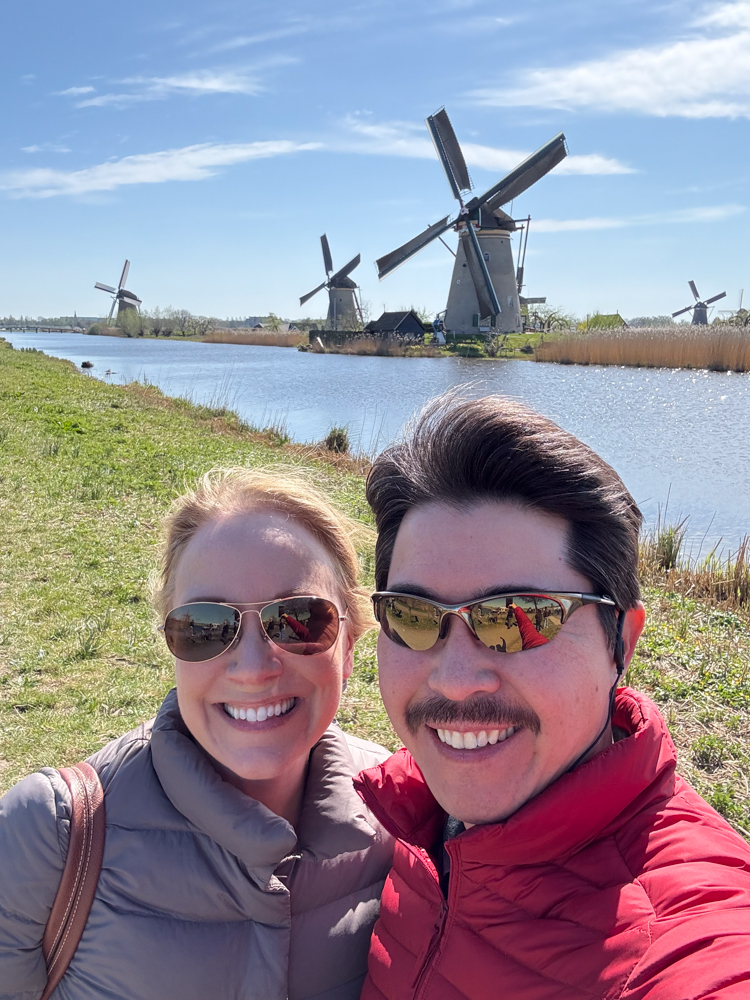
Kinderdijk sits right where the Noord and the Lek rivers come together, and that geography is the whole reason the windmills are there. This is one of the lowest points in an already very low country, and the mills that have stood here since the 1730s existed to pump water out of the surrounding polders. The ship docks directly at the Kinderdijk site, which means you can walk right off the gangway to the entrance without getting on a bus.
That afternoon we made a brief stop in Rotterdam, though not long enough to properly explore the city. I hope Viking adds more time here in future itineraries. Rotterdam is a genuinely compelling city, especially for its architecture, and it deserves more than a passing glance from the water. That night we sailed south, and the next morning we woke up in Belgium.
Antwerp, Belgium (The Westerschelde)
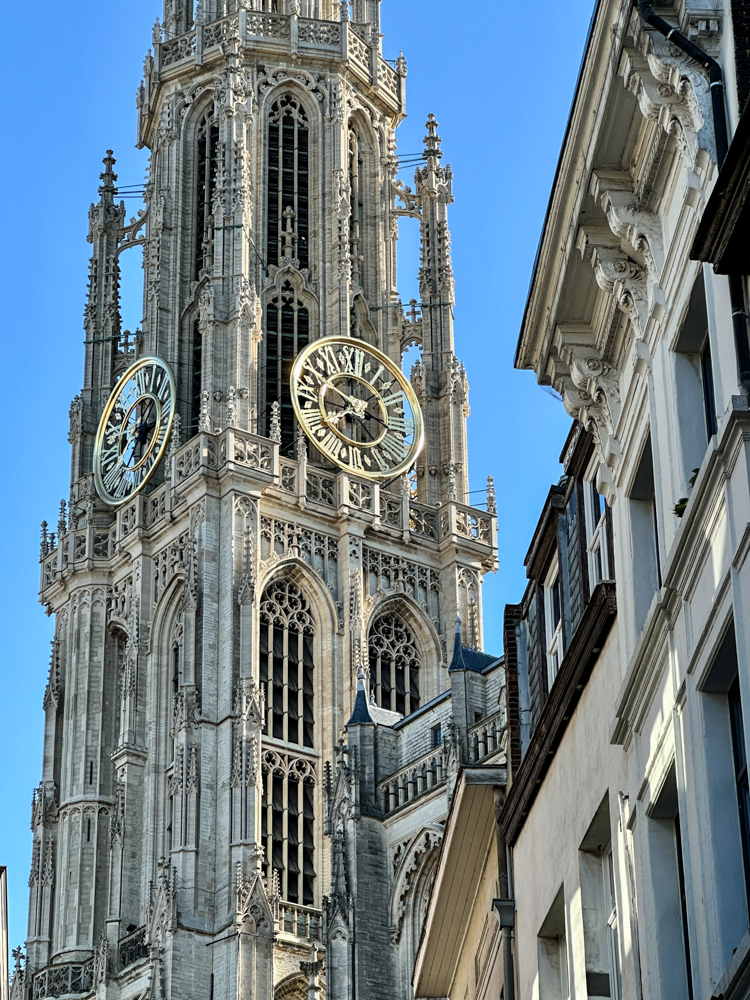
Waking up docked in Antwerp felt like a different world after the quiet Dutch polderlands. This is a real working port city, one of the busiest in Europe, with a skyline that mixes medieval towers and modern cranes, and an energy that hits you as soon as you step off the ship.
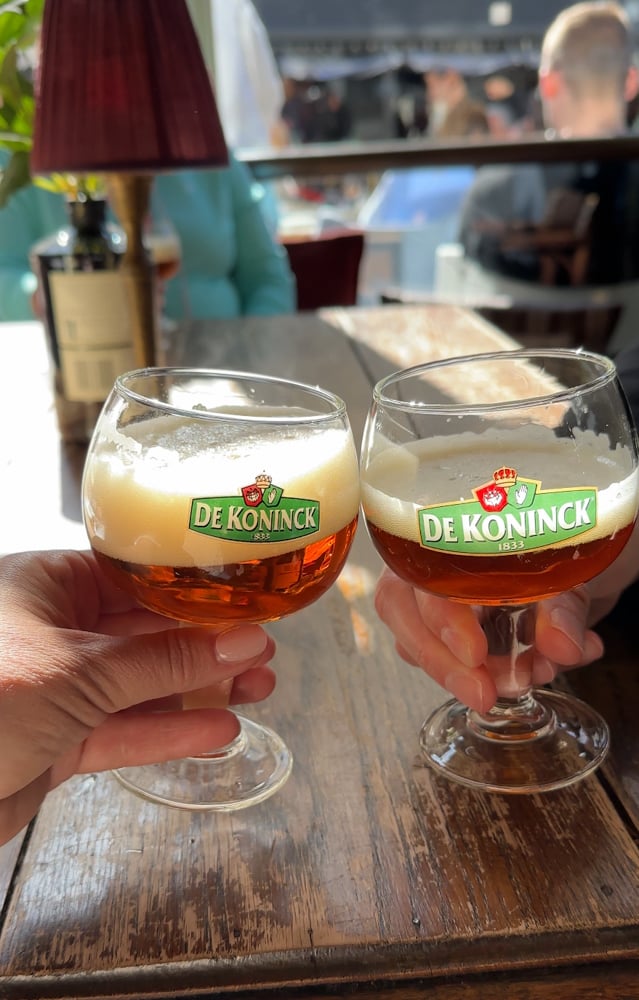
The ship was docked in Antwerp all day and until late evening, so after our Antwerp food tour we still had time to wander on our own and pick up chocolates from Leonidas to bring home (a tip from our cruise director Emilie, who lives in Antwerp). Even though I feel like we got to spend a lot of time here, it’s a city that deserves more than a day, and we’d go back without hesitation.
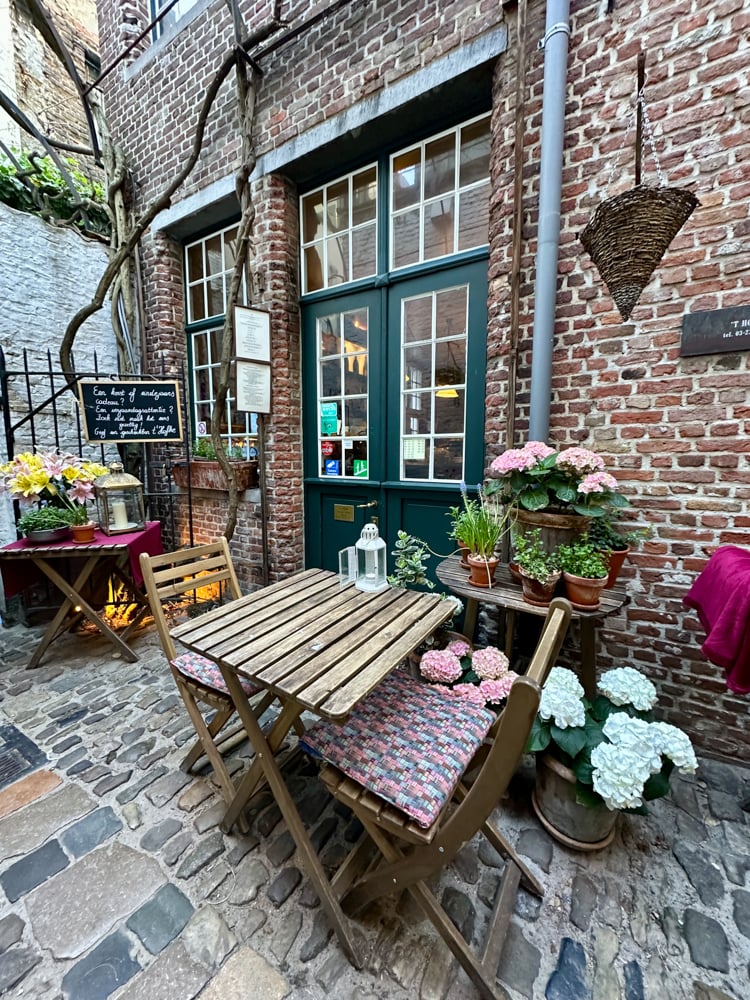
Middelburg (Zeeland waterways)
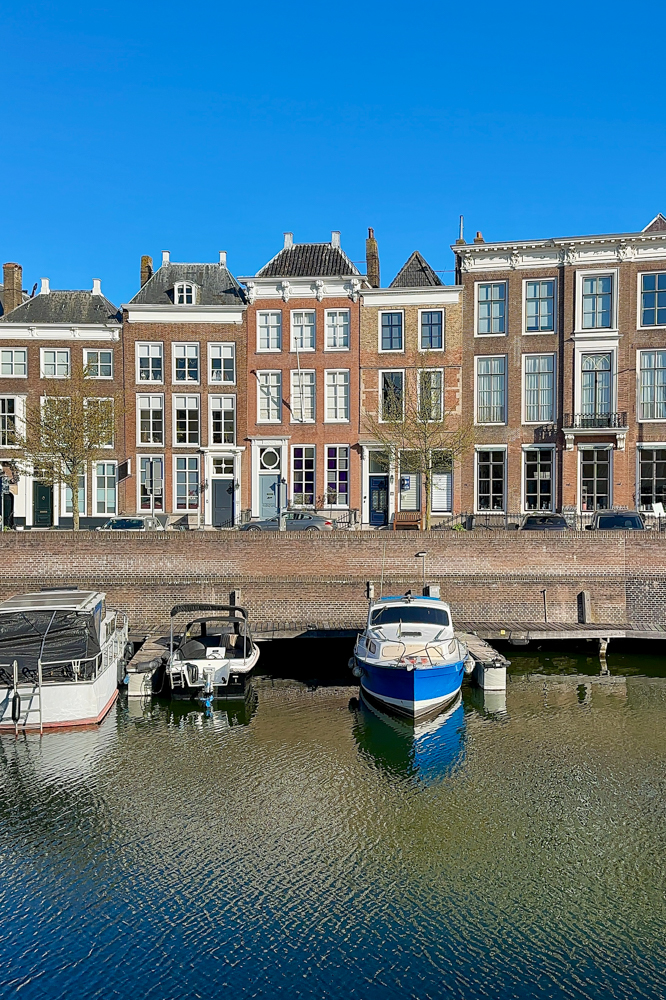
After Antwerp the ship heads back into the Netherlands and into Zeeland, the southwestern province where the delta really starts to show its character. This is a landscape of islands and inlets and channels going in every direction, and Middelburg sits on the Walcheren peninsula (a former island, now connected to the mainland). It reminded us immediately of Enkhuizen: same storybook quality to the architecture, same sense of a Golden Age prosperity that got frozen in time. We walked straight off the ship and into the old city center.
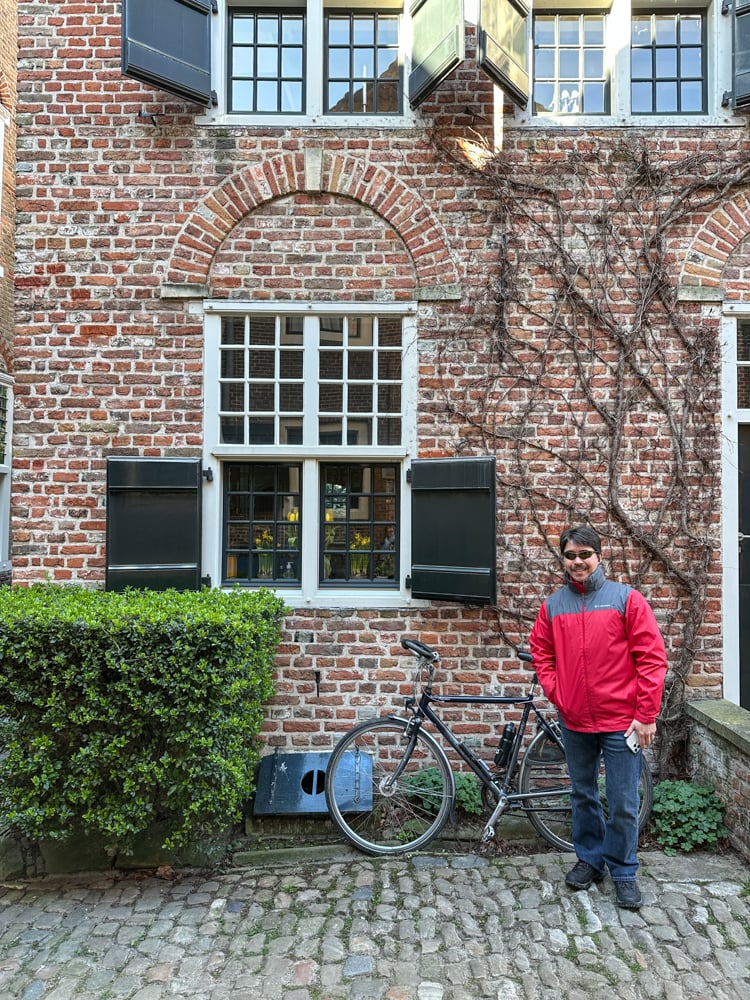
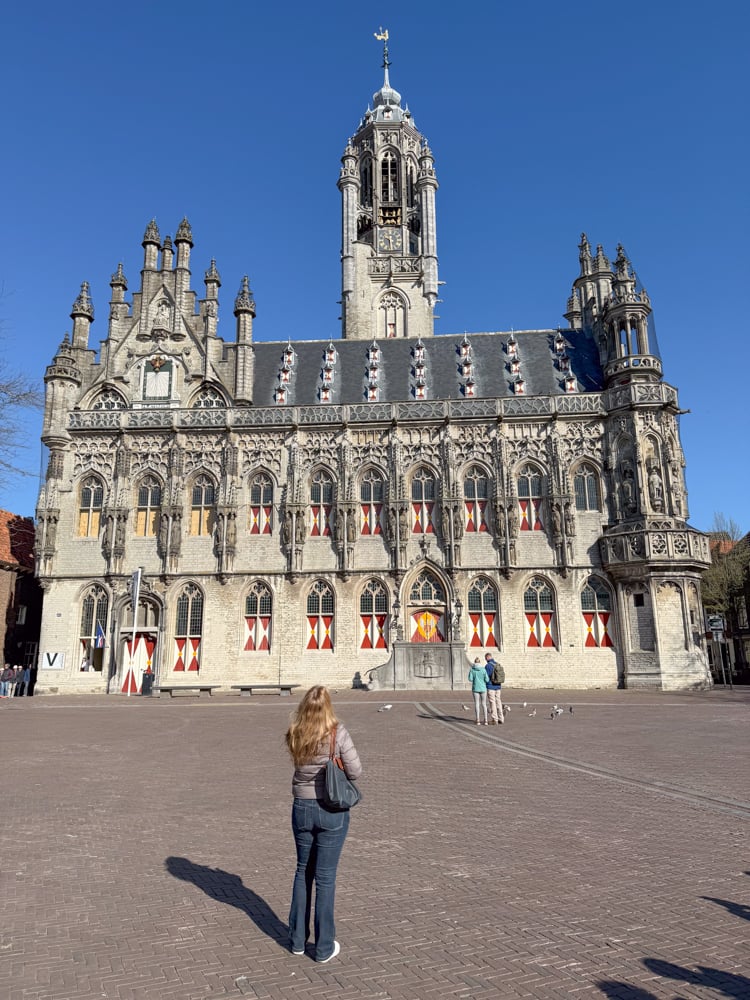
Our guide mentioned that Middelburg is the home of the Four Freedoms Awards, which honor people who have demonstrated a commitment to the four freedoms Franklin Roosevelt spelled out in his January 1941 speech to Congress. And here’s the detail that really makes it click: the Roosevelt family has roots in Zeeland, which is exactly why Middelburg was chosen for the international ceremony. That kind of unexpected connection between a small Dutch city and American history is one of those things that sticks with you long after you’re back on the ship.
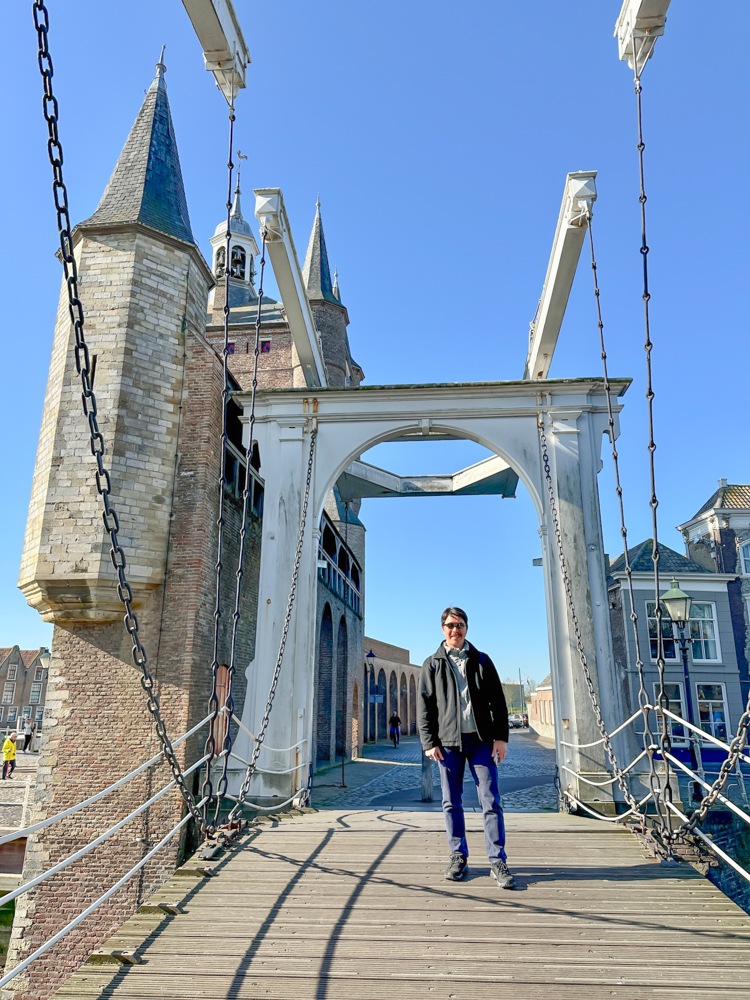
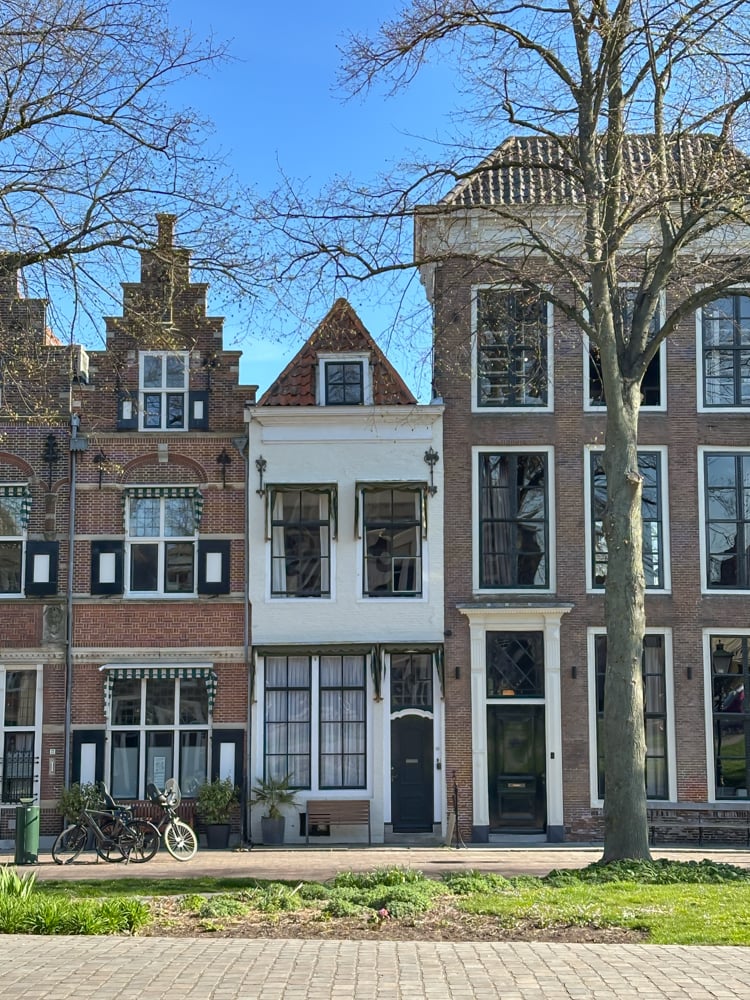
Veere (Zeeland waterways)
From Middelburg we made our way to Veere, a tiny harbor town that feels like it has been perfectly preserved. It earned its city status back in 1355, and for centuries it was a major trading hub with Scotland, which is exactly why the Scottish House is there, a beautifully restored merchant building that still carries that history in its walls. We spent time around the Grote Kerk (the Great Church) too. Look up at the windows and you’ll notice they’re unusually small for a church that size, the result of past wind damage that shaped how it was rebuilt. But what we loved most was just the feel of the place. Sailboats bobbing in the harbor, little shops tucked into old stone buildings, the smell of the saltwater in the air. It has that particular magic of a quaint seaside town.
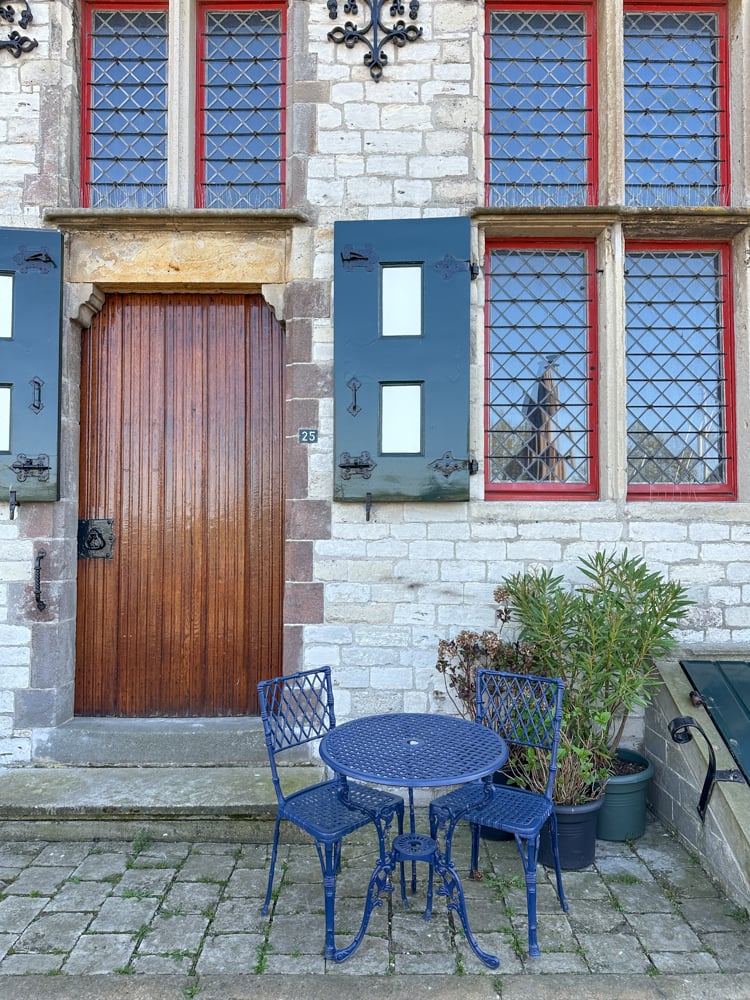
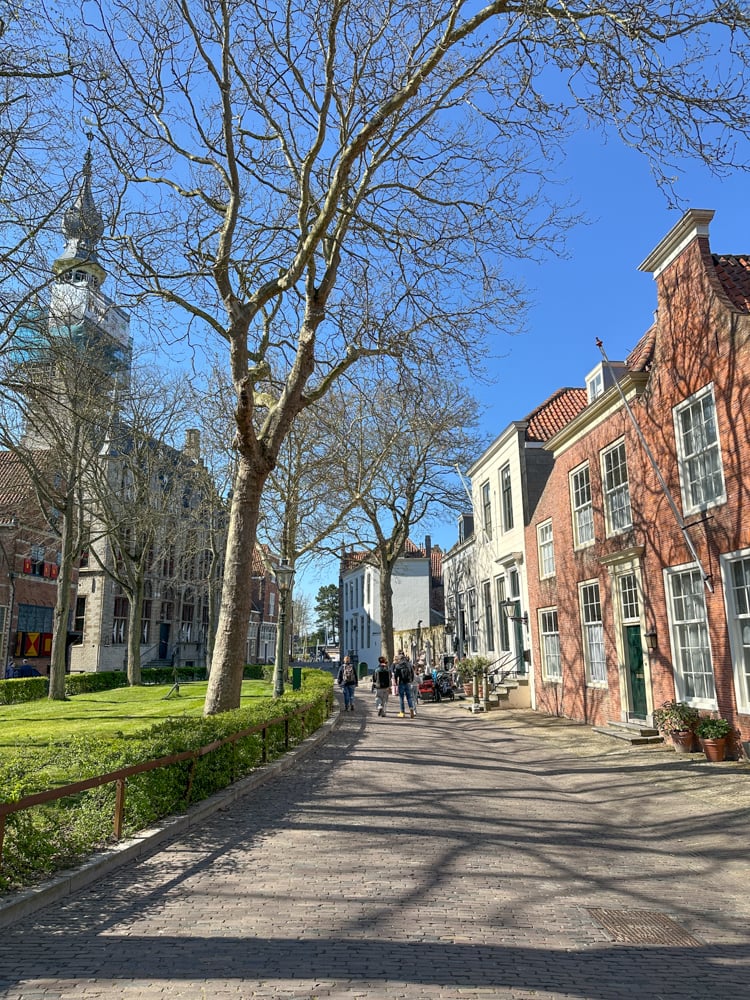
Zierikzee and Bruinisse (The Zeeland Delta)
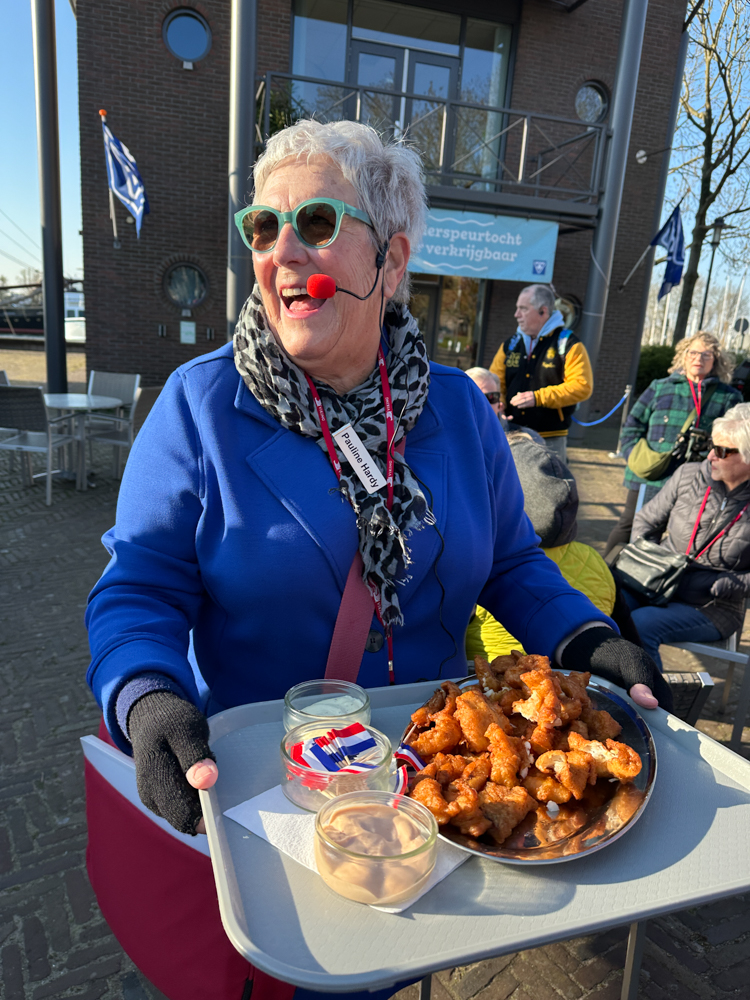
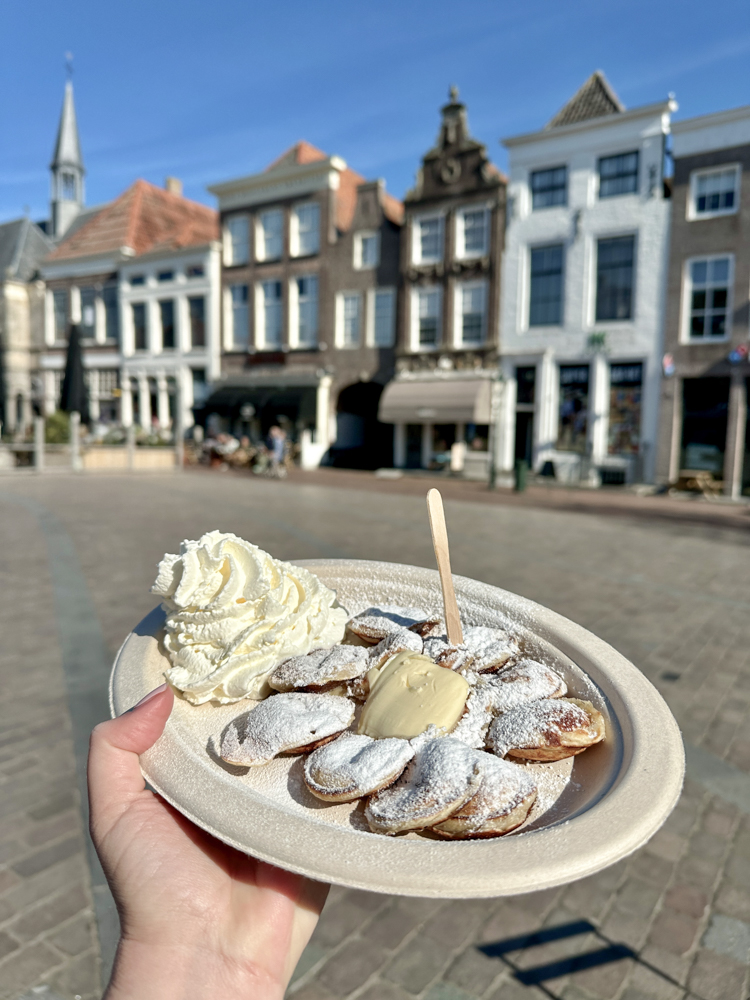
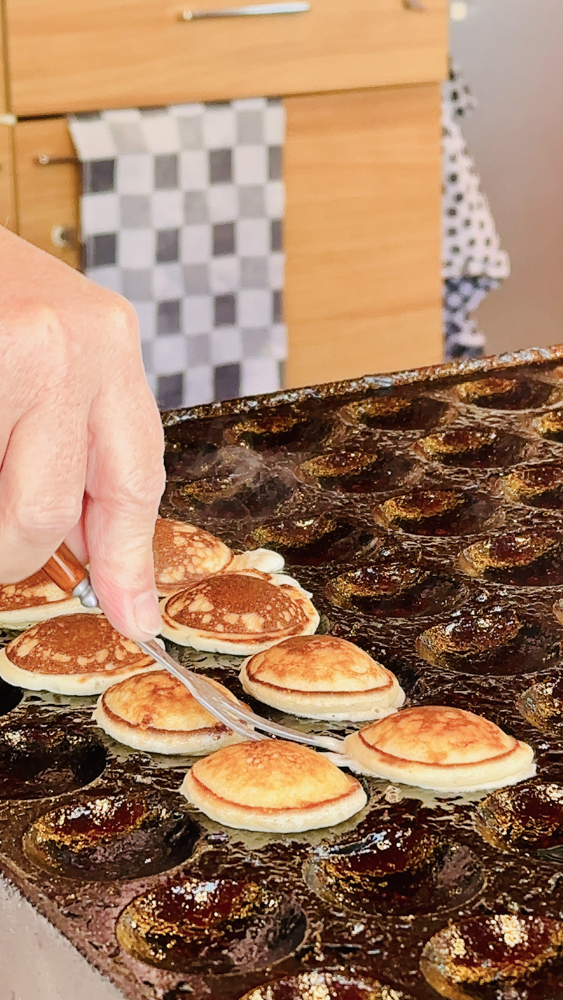
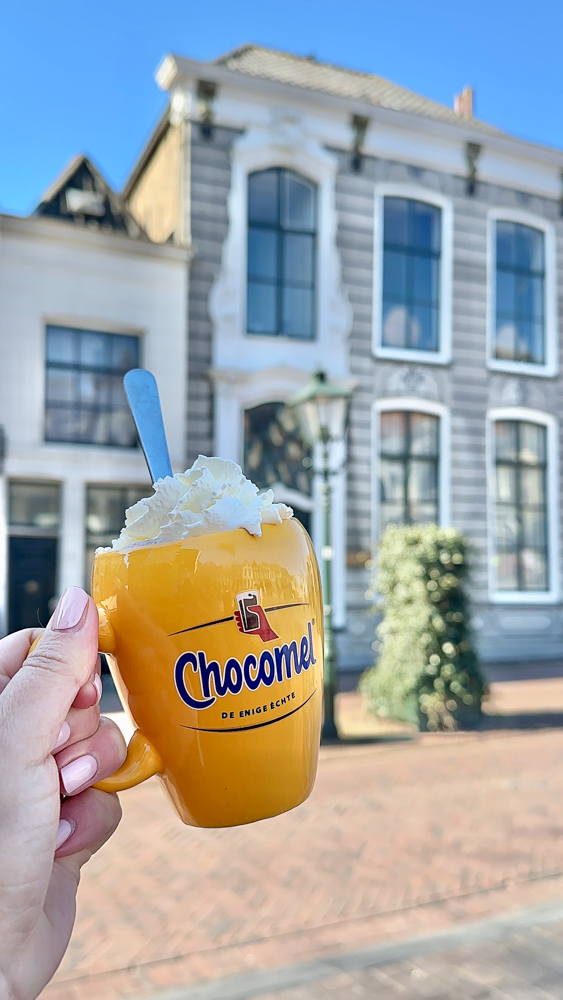
Our last stop before heading back to Amsterdam was Bruinisse, a small harbor town right in the heart of the Zeeland delta. We didn’t linger in Bruinisse itself. Instead, we hopped on a bus to Ouwerkerk to visit the Watersnoodsmuseum, and then on to Zierikzee for a wander through town. It was an unusually cold spring day, so we were very happy to find a little cart in Havenpark selling poffertjes, those tiny Dutch pancakes that come buried in butter and powdered sugar. We grabbed those and some Chocomel, the Dutch hot chocolate, and honestly it was exactly what the day called for.
The Watersnoodsmuseum tells the story of the 1953 North Sea flood that killed more than 1,800 people in the Netherlands, most of them right here in Zeeland. And what gives it such weight is that the museum is actually housed inside the four concrete caissons that were used to close the last breach in the dike at Ouwerkerk after the disaster. You’re not just reading about it. You’re standing inside the repair.
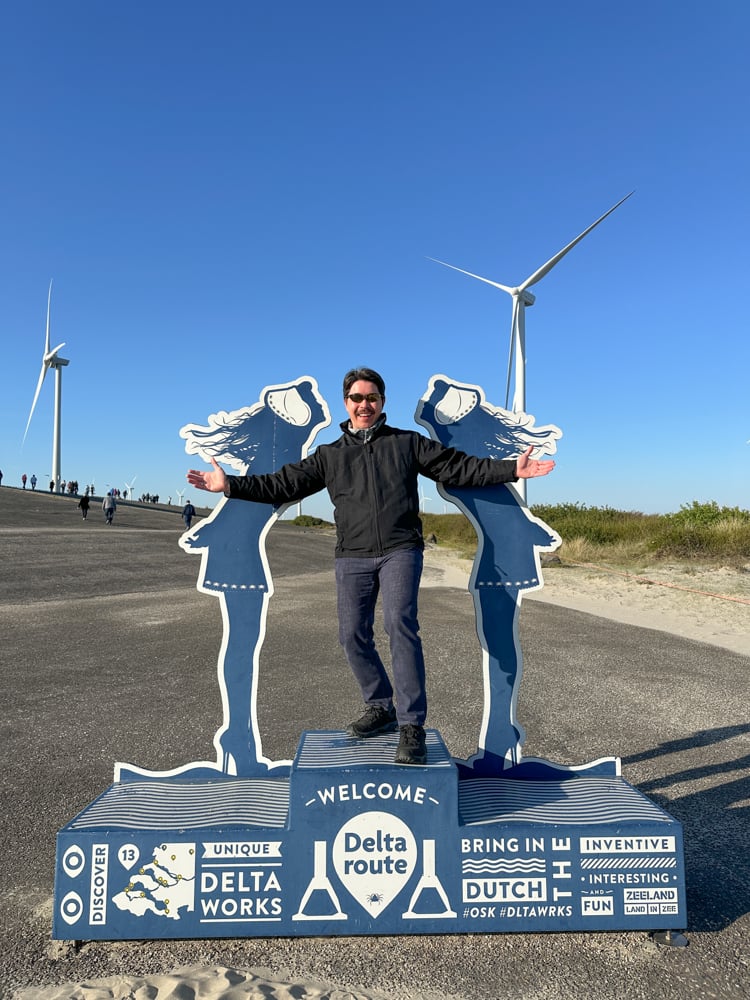
Being out in the delta, surrounded by these engineered waterways, and then walking through that museum back to back… it hits differently than it would anywhere else. The Dutch relationship with water isn’t a history lesson. It’s not something that happened and got solved. It’s ongoing, and in this corner of Zeeland, you feel that in your bones.
Back to Amsterdam
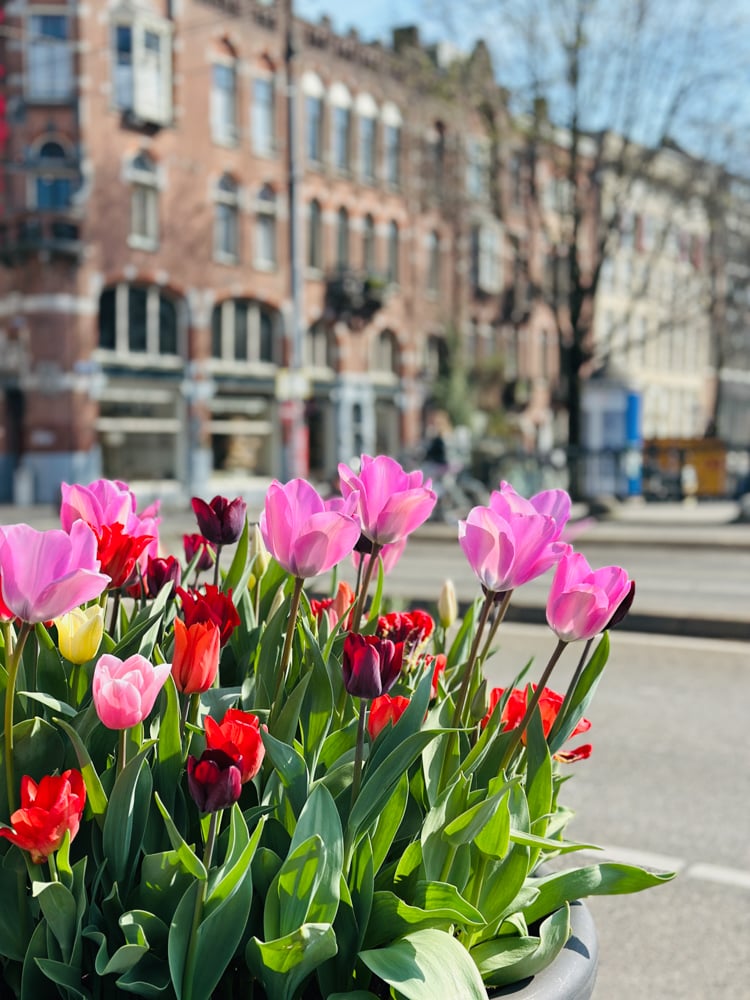
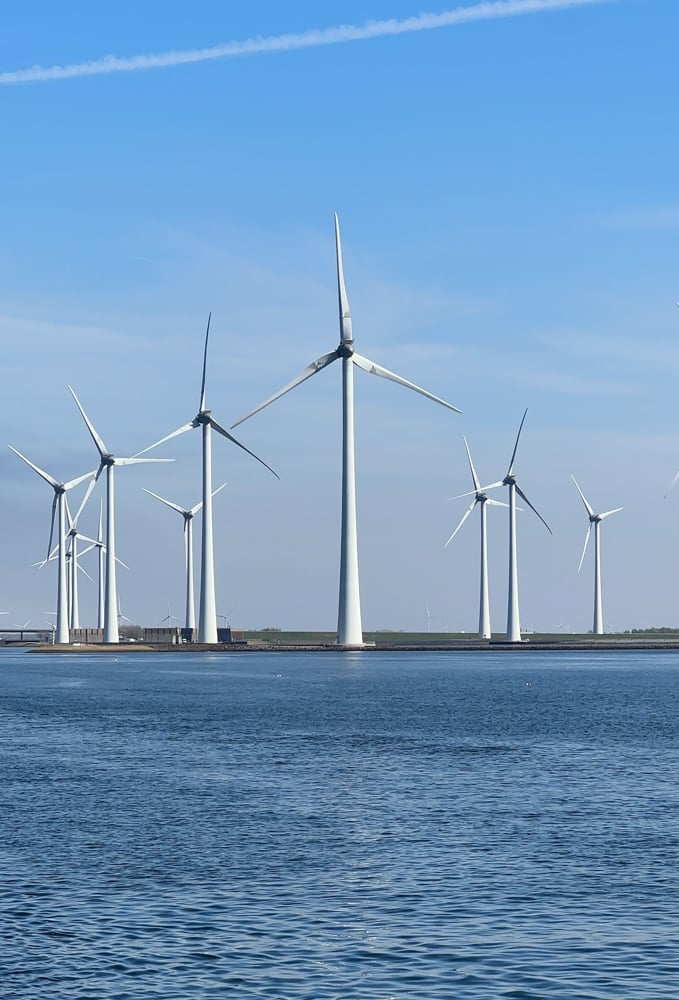
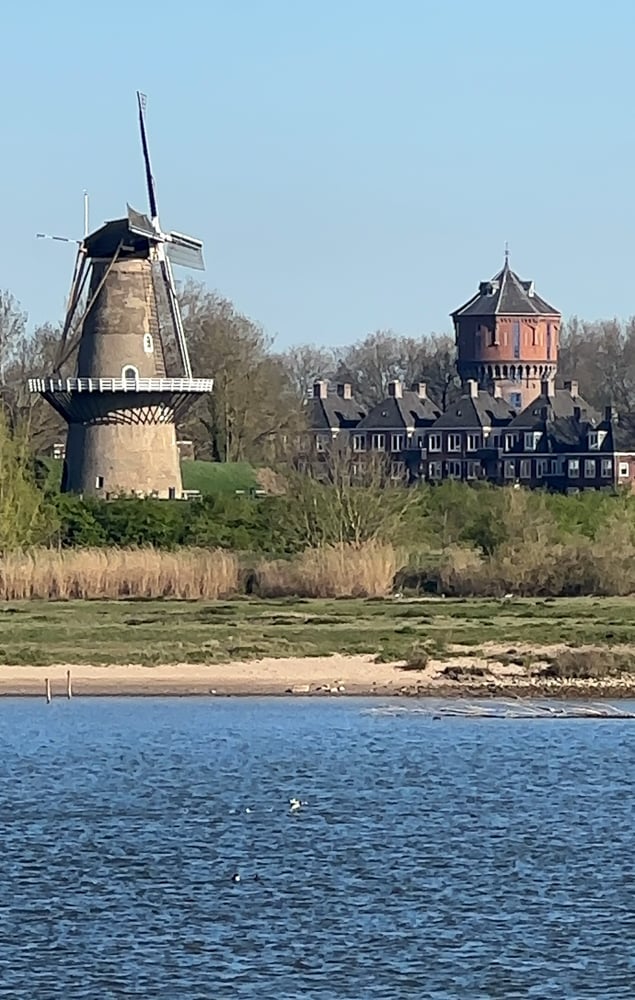
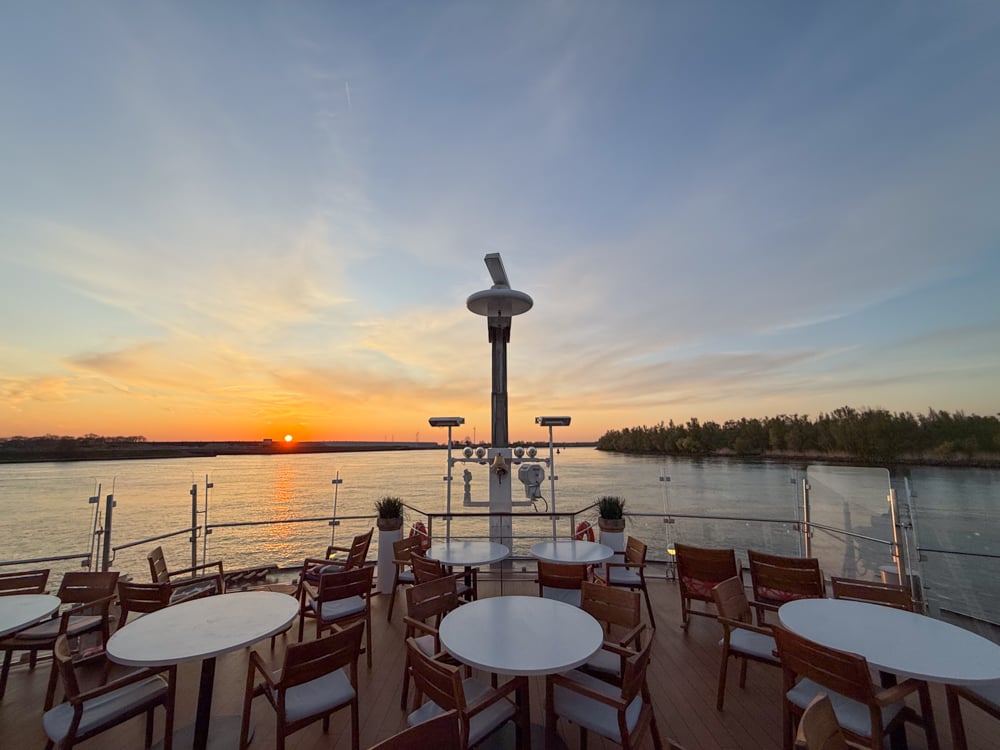
The sail back north to Amsterdam from Bruinisse is a long one, and it’s a good time to sit on the deck and let the delta scroll past, seeing the contrast of windmills, both old and modern. You arrive back in the city having covered a lot of ground and a lot of water, and having seen a version of the Netherlands that most visitors simply don’t reach. The smaller towns, the working waterways, the polderlands, the windmills old and new. And if your cruise includes Keukenhof for the tulips, that’s still something to look forward to at the end of the cruise before heading home.
How the Tulips & Windmills Itinerary Rivers Compare to the Rhine or Danube
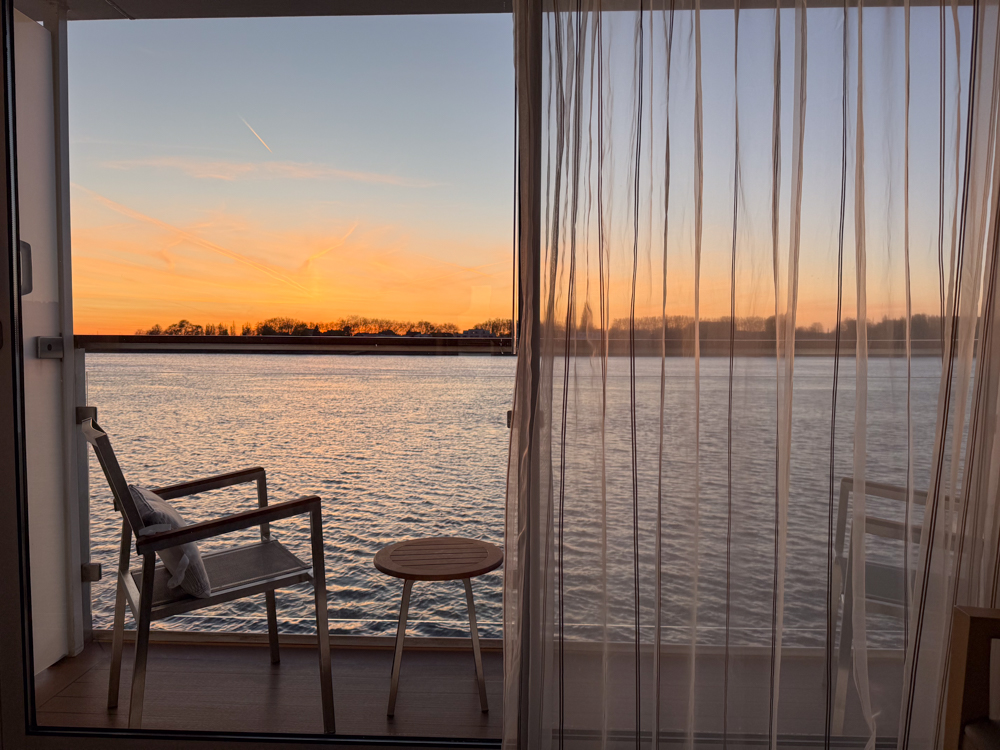
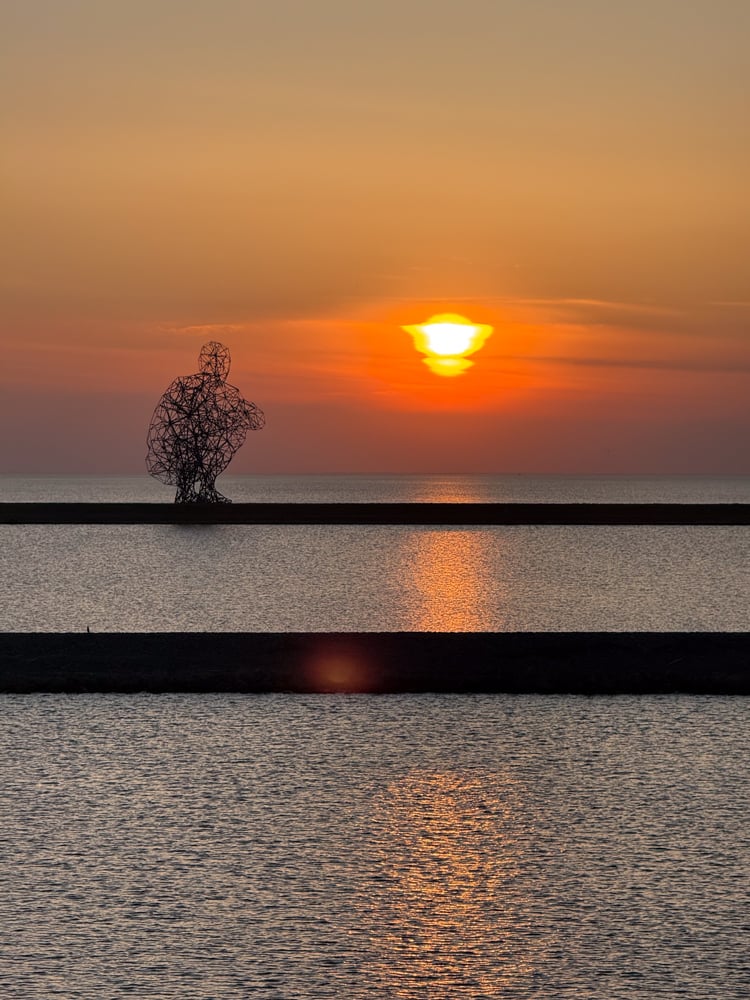
If you are deciding between the Tulips & Windmills itinerary and something on the Rhine or Danube, the main thing to understand is that the scenery is genuinely different. There are no vineyard-covered hillsides here. No castle ruins on the cliffs. The landscape is flat, and if you are not prepared for that, it can feel underwhelming at first. But Pete and I found that once we stopped waiting for it to look like the Rhine, we started noticing what it actually looked like, and it is beautiful in its own very specific way. Big skies. Open water. Green fields. Windmills. That particular Dutch light that photographers and painters have chased for 400 years. And, of course, the food and service on board Viking is excellent.
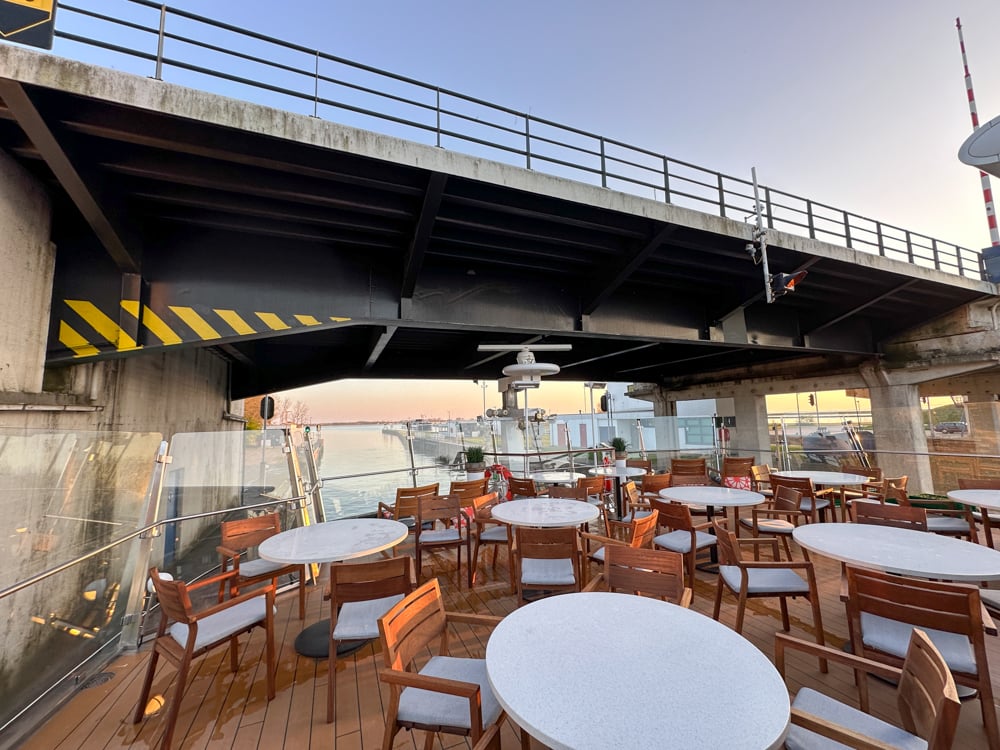
The port experience is also genuinely different. On a Rhine cruise you tend to dock at larger, more visited cities. Here, several stops are small enough that you walk off the ship directly into a historic town center with no crowds and no bus transfer. Enkhuizen, Middelburg, Kinderdijk … you’re just there. That kind of access is hard to find anywhere else.
I wouldn’t necessarily recommend this for your very first European river cruise. This is for someone who has already done the Rhine or Danube and wants a completely different experience. Spring is definitely the time to go and the tulips are the reason this cruising season exists.
We sailed this route aboard Viking’s Einar. For everything about the ship, the cabins, and what the onboard experience is actually like, read our full Viking Tulips & Windmills cruise review.